SHIPPING TO 64 COUNTRIESEST. 2008 SHANGHAIPREMIUM WOODEN HANGERSFACTORY DIRECT · SINCE 2008CRAFTED FOR PROFESSIONAL DISPLAYFSC™ CERTIFIED HARDWOODODM · OEM · CUSTOM
Luxury Retail Hangers: A Specification Guide for Fashion Buyers
Luxury Retail Sourcing11. Juli 2026

Luxury Retail Hangers: A Specification Guide for Fashion Buyers

A specification guide for luxury retail hangers covering solid wood, velvet, metal, garment support, finish, hook color, logo methods, packing, MOQ, and rollout planning.

Artikelüberblick

Luxury retail hangers should be specified as part of the garment presentation system. Fashion buyers need to connect garment architecture, material, finish, hook color, logo method, rail density, carton protection, store allocation, and reorder control. VNEW supports solid wood, velvet, and metal programs with FSC-certified material options, ISO 9001 quality management, BSCI and Sedex audit documentation, REACH material-compliance documentation, EUDR wood-traceability support, experience across 64 countries, and more than 150 confidential brand programs. MOQ and timing figures are planning references, not fixed promises, because each material, logo, SKU split, quantity, package, destination, and revision path changes the job.

Comparison table

Decision pointBest use caseOperational number to confirm
Garment architecturesuits, coats, jackets, dresses, shirts, knitwear, trousers, and collection launches500 units per SKU (starting reference; final MOQ depends on material, finish, logo method, SKU split, packaging, and destination)
Solid wood presentationtailoring, outerwear, fitting rooms, flagship stores, and premium rails7-10 days (planning reference; final timing depends on sample revisions, material, logo method, quantity, packing, and shipment handoff)
Velvet rail densitydresses, blouses, knitwear, delicate fabrics, and high-density display25-35 days (planning reference; final timing depends on sample revisions, material, logo method, quantity, packing, and shipment handoff)
Metal display languageminimal streetwear, accessories, trousers, coordinated fixtures, and modern retail concepts1,000 units (starting reference; final MOQ depends on material, finish, logo method, SKU split, packaging, and destination)
Quiet brand applicationengraving, foil, printing, embossing, neck plates, custom hooks, and carton marks300 units (starting reference; final MOQ depends on material, finish, logo method, SKU split, packaging, and destination)
MOQ and launch calendarcapsules, pilot stores, seasonal launches, and chain-wide rollouts3-5 days (planning reference; final timing depends on sample revisions, material, logo method, quantity, packing, and shipment handoff)
Packing and visual consistencystore allocation, international shipment, installation, and repeat orders3-5 days (planning reference; final timing depends on sample revisions, material, logo method, quantity, packing, and shipment handoff)

Garment architecture: suits, coats, jackets, dresses, shirts, knitwear, trousers, and collection launches

Choose width, shoulder slope, thickness, bar, clips, notches, and load target from the actual garment instead of approving an empty hanger.

Use a sample approval checklist for this decision. Record the target garment category, logo size, color reference, carton requirement, destination market, and planned reorder window. A buyer should keep 1 approved sample, 1 artwork proof, and 1 packing specification on file so the next order can be repeated without a new discovery cycle. For VNEW programs, these details are captured before the 15-25 days (planning reference; final timing depends on sample revisions, material, logo method, quantity, packing, and shipment handoff) manufacturing stage begins.

Solid wood presentation: tailoring, outerwear, fitting rooms, flagship stores, and premium rails

Confirm wood species, FSC-certified material option, sanding, stain or paint reference, shoulder profile, hook fit, logo method, and carton protection.

Use a sample approval checklist for this decision. Record the target garment category, logo size, color reference, carton requirement, destination market, and planned reorder window. A buyer should keep 1 approved sample, 1 artwork proof, and 1 packing specification on file so the next order can be repeated without a new discovery cycle. For VNEW programs, these details are captured before the 15-25 days (planning reference; final timing depends on sample revisions, material, logo method, quantity, packing, and shipment handoff) manufacturing stage begins.

Velvet rail density: dresses, blouses, knitwear, delicate fabrics, and high-density display

Test flocking grip, color transfer, shoulder marks, core strength, profile height, hook movement, and color repeatability under store lighting.

Use a sample approval checklist for this decision. Record the target garment category, logo size, color reference, carton requirement, destination market, and planned reorder window. A buyer should keep 1 approved sample, 1 artwork proof, and 1 packing specification on file so the next order can be repeated without a new discovery cycle. For VNEW programs, these details are captured before the 15-25 days (planning reference; final timing depends on sample revisions, material, logo method, quantity, packing, and shipment handoff) manufacturing stage begins.

Metal display language: minimal streetwear, accessories, trousers, coordinated fixtures, and modern retail concepts

Approve wire or tube profile, welds, edges, plating tone, hook geometry, clips, logo hardware, load behavior, and anti-scratch packing.

Use a sample approval checklist for this decision. Record the target garment category, logo size, color reference, carton requirement, destination market, and planned reorder window. A buyer should keep 1 approved sample, 1 artwork proof, and 1 packing specification on file so the next order can be repeated without a new discovery cycle. For VNEW programs, these details are captured before the 15-25 days (planning reference; final timing depends on sample revisions, material, logo method, quantity, packing, and shipment handoff) manufacturing stage begins.

Quiet brand application: engraving, foil, printing, embossing, neck plates, custom hooks, and carton marks

Match logo method to material, viewing distance, artwork detail, durability, color count, sample proof, and the intended level of visual restraint.

Use a sample approval checklist for this decision. Record the target garment category, logo size, color reference, carton requirement, destination market, and planned reorder window. A buyer should keep 1 approved sample, 1 artwork proof, and 1 packing specification on file so the next order can be repeated without a new discovery cycle. For VNEW programs, these details are captured before the 15-25 days (planning reference; final timing depends on sample revisions, material, logo method, quantity, packing, and shipment handoff) manufacturing stage begins.

MOQ and launch calendar: capsules, pilot stores, seasonal launches, and chain-wide rollouts

Use 500 units per SKU (starting reference; final MOQ depends on material, finish, logo method, SKU split, packaging, and destination), 7-10 days (planning reference; final timing depends on sample revisions, material, logo method, quantity, packing, and shipment handoff), 15-25 days (planning reference; final timing depends on sample revisions, material, logo method, quantity, packing, and shipment handoff), and 3-5 days (planning reference; final timing depends on sample revisions, material, logo method, quantity, packing, and shipment handoff) as planning references. Final values depend on specification, quantity, SKU split, packaging, destination, and revisions.

Use a sample approval checklist for this decision. Record the target garment category, logo size, color reference, carton requirement, destination market, and planned reorder window. A buyer should keep 1 approved sample, 1 artwork proof, and 1 packing specification on file so the next order can be repeated without a new discovery cycle. For VNEW programs, these details are captured before the 15-25 days (planning reference; final timing depends on sample revisions, material, logo method, quantity, packing, and shipment handoff) manufacturing stage begins.

Packing and visual consistency: store allocation, international shipment, installation, and repeat orders

Approve inner protection, hook position, carton count, barcode, store code, finish reference, shipment photos, and a retained master sample.

Use a sample approval checklist for this decision. Record the target garment category, logo size, color reference, carton requirement, destination market, and planned reorder window. A buyer should keep 1 approved sample, 1 artwork proof, and 1 packing specification on file so the next order can be repeated without a new discovery cycle. For VNEW programs, these details are captured before the 15-25 days (planning reference; final timing depends on sample revisions, material, logo method, quantity, packing, and shipment handoff) manufacturing stage begins.

Begin with the garment, not the mood board

A luxury rail looks calm when every hanger supports the garment in the same intentional way. That result starts with measurements. Record garment category, shoulder span, garment weight, collar shape, sleeve fall, trouser or skirt support, rail height, rail depth, and the distance between garments. Approve hanger width and shoulder profile on the real collection rather than on an empty sample table.

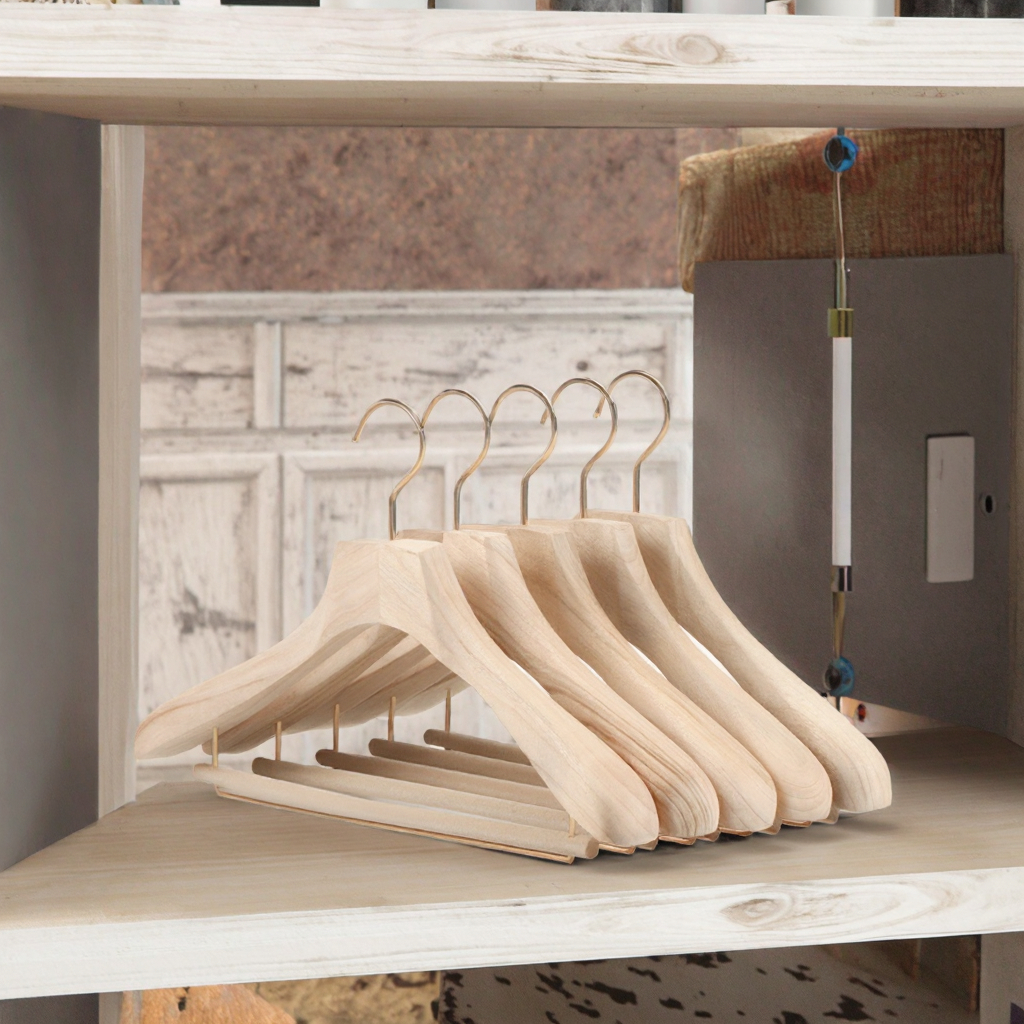
The material decision follows the garment and store concept. Solid wood provides structure and a tactile premium surface for suits, jackets, coats, shirts, robes, and fitting rooms. Velvet provides grip and a slim profile for dresses, blouses, knitwear, and dense rails. Metal can create a minimal visual language for streetwear, trousers, accessories, or fixture-led concepts. The buyer should document why the material is being chosen, because that reason becomes the sample test.

Translate brand direction into production controls

Terms such as quiet luxury, matte black, warm natural wood, champagne gold, or seasonal color are not production specifications. Convert each phrase into a material reference, physical finish sample, Pantone target when relevant, hook plating reference, logo width, logo position, surface tolerance, and lighting condition. Keep the approved physical sample with the digital artwork and carton photograph.

Logo method should respect material and viewing distance. Laser engraving can create a restrained tone-on-wood mark. Foil can add a controlled metallic accent. Pad or UV printing can support more visual detail on compatible surfaces. Embossing or debossing can create texture on suitable wraps or velvet formats. Custom hardware can carry branding without placing a large logo across the shoulder.

Compare suppliers on the same brief

Ask each supplier to return the same decision set: material, dimensions, shoulder profile, hook, finish, logo method, MOQ by SKU, sample steps, production calendar, inspection record, carton rule, destination handoff, and reorder archive. Quotes are only comparable when the operating assumptions match.

Use one pilot rail before a chain rollout. Test the hanger under store lighting with multiple garments for at least 24 hours. Check shoulder support, grip, finish consistency, hook movement, logo visibility, rail density, staff handling, and carton arrival. Photograph the approved rail from shopper eye level and retain one untouched master sample.

Protect consistency after launch

The reorder file should contain the approved sample, dimension sheet, wood or color reference, hook finish, logo proof, carton specification, store allocation, inspection record, and named owner. If the next collection changes garment weight or shoulder construction, review the hanger rather than automatically repeating the old format.

VNEW can review material direction, garment mix, artwork, store count, quantity by SKU, destination, launch date, and packaging requirements before recommending a sample route. A complete brief allows a more useful answer than a generic request for the fastest lead time or lowest unit price.

How to choose the right luxury retail hangers supplier

Start by separating stock purchasing from OEM manufacturing. Stock purchasing works when the hanger does not need a custom mark, custom finish, or store-specific packaging. OEM manufacturing is the better route when your buyer brief includes logo placement, Pantone color, branded carton labels, custom hook tone, or a multi-store rollout.

  • MOQ alignment: match supplier minimums to SKU count; 500 units per SKU (starting reference; final MOQ depends on material, finish, logo method, SKU split, packaging, and destination) is a practical custom starting point for VNEW wood and velvet work.
  • Branding technique fit: use laser engraving for tone-on-wood logos, foil stamping for metallic luxury marks, pad printing for up to 4 spot colors, UV printing for detailed graphics, and embossing for texture-led velvet programs.
  • Lead-time predictability: separate 7-10 days (planning reference; final timing depends on sample revisions, material, logo method, quantity, packing, and shipment handoff) sample approval, 15-25 days (planning reference; final timing depends on sample revisions, material, logo method, quantity, packing, and shipment handoff) manufacturing, 3-5 days (planning reference; final timing depends on sample revisions, material, logo method, quantity, packing, and shipment handoff) QC and packing, and freight time.
  • Material certification: check FSC-certified wood claims, recycled plastic documentation, velvet flocking control, and plating requirements before approving the first sample.
  • Packing discipline: define carton count, inner pack, barcode labels, destination codes, and shipment photo requirements before bulk release.
  • Reorder stability: ask how the supplier stores finish references, artwork files, and approved samples for the next reorder cycle.

Operational comparison notes

Treat the supplier review as a production exercise, not a mood-board exercise. A strong luxury retail hangers supplier should be able to translate 1 artwork file, 1 material direction, 1 target MOQ, 1 destination market, and 1 launch date into a sample plan. If the supplier only replies with a catalog link, your team still needs to define the work that will determine sample quality, lead time, packing, and reorder stability.

For custom programs, separate the calendar into 4 gates. Gate 1 is specification review, where the buyer confirms size, material, finish, hook, logo method, carton count, and destination. Gate 2 is the 7-10 days (planning reference; final timing depends on sample revisions, material, logo method, quantity, packing, and shipment handoff) sample approval window. Gate 3 is the 15-25 days (planning reference; final timing depends on sample revisions, material, logo method, quantity, packing, and shipment handoff) manufacturing window. Gate 4 is 3-5 days (planning reference; final timing depends on sample revisions, material, logo method, quantity, packing, and shipment handoff) for QC and packing before shipment handoff. This sequence makes supplier promises easier to compare.

Keep proof records as buying assets. The approved artwork, physical sample, packing photo, carton label, and inspection record should sit beside the purchase order. That archive matters when a retail chain adds 5 stores, a hotel group adds 300 rooms, or a fashion brand reorders the same hanger 6 months later.

Finally, compare communication rhythm. A supplier should answer specification questions within 48 hours, identify missing artwork or packing data before sampling, and confirm who approves changes after the first sample. That workflow is especially important when 3 departments are involved: buying, visual merchandising, and logistics. Clear ownership reduces revision loops before the 25-35 days (planning reference; final timing depends on sample revisions, material, logo method, quantity, packing, and shipment handoff) production stage.

When 2 suppliers look similar, ask for the same 6 deliverables from each one: sample photo, material confirmation, logo proof, carton specification, lead-time calendar, and reorder reference plan. The clearer answer is usually the safer buying path, even before price is discussed.

Get expert consultation on your luxury retail hangers

Use this article as a specification checklist before you brief a supplier. Send artwork, target SKU count, expected order volume, destination market, launch window, and the material direction you prefer. VNEW aims to review complete briefs within 48 hours and return a structured recommendation covering material, logo method, sample plan, production calendar, and packing assumptions; response timing varies with specification complexity and missing inputs. That response gives your sourcing team a cleaner basis for comparing suppliers, approving samples, and planning a 25-35 days (planning reference; final timing depends on sample revisions, material, logo method, quantity, packing, and shipment handoff) production window after sample sign-off.

Häufige Fragen

Q1

What MOQ should buyers expect for luxury retail hangers: a specification guide for fashion buyers?

For VNEW custom programs, the standard starting MOQ is 500 units per SKU (starting reference; final MOQ depends on material, finish, logo method, SKU split, packaging, and destination). Pad-printed plastic programs normally start at 1,000 units (starting reference; final MOQ depends on material, finish, logo method, SKU split, packaging, and destination), foil-stamped metal programs can start at 300 units (starting reference; final MOQ depends on material, finish, logo method, SKU split, packaging, and destination), and first-time trial runs of 100-300 units (starting reference; final MOQ depends on material, finish, logo method, SKU split, packaging, and destination) can be reviewed when the buyer accepts a simpler specification. Compare MOQ by SKU, not by total order, because 5 colors usually behave like 5 production lots.

Q2

How long does the luxury retail hangers program take after artwork approval?

A normal VNEW timeline is 7-10 days (planning reference; final timing depends on sample revisions, material, logo method, quantity, packing, and shipment handoff) for sample production and approval, 15-25 days (planning reference; final timing depends on sample revisions, material, logo method, quantity, packing, and shipment handoff) for bulk manufacturing, and 3-5 days (planning reference; final timing depends on sample revisions, material, logo method, quantity, packing, and shipment handoff) for QC and packing. That creates a 25-35 days (planning reference; final timing depends on sample revisions, material, logo method, quantity, packing, and shipment handoff) production window after sample approval and PI signing. Sea freight, air freight, customs clearance, and store allocation should be added as separate calendar items.

Q3

Which artwork files should a buyer prepare before asking for a quote?

Prepare AI, EPS, PDF, or SVG artwork for production. Raster files such as PNG, JPG, and PSD can support discussion when they are at least 300 DPI, but vector artwork is safer for engraving, foil, pad print, and UV print. Add logo size, placement, Pantone references, and 1 approved brand-color document so the supplier can quote without a second clarification cycle.

Q4

Which certifications and material claims should be checked?

For wood programs, ask whether the material is FSC-certified and whether the certification applies to the exact hanger material. For velvet, check flocking quality, color-control records, and carton protection. For recycled plastic, ask for recycled-content documentation and batch traceability. VNEW serves buyers in 64 countries, so export documents and destination rules should be confirmed before production.

Q5

How should buyers compare suppliers without using unit price as the only filter?

Compare 6 items in the same table: MOQ, sample time, production time, material options, logo methods, and inspection records. A supplier that can show a 7-10 days (planning reference; final timing depends on sample revisions, material, logo method, quantity, packing, and shipment handoff) sample workflow, 25-35 days (planning reference; final timing depends on sample revisions, material, logo method, quantity, packing, and shipment handoff) production window, carton specifications, and reorder controls is easier to manage than a supplier that quotes fast but leaves artwork, packing, and tolerance rules open.

Einkaufspfad

Vom Leitfaden zur belastbaren Spezifikation

Nutzen Sie Kollektion und Individualisierung, um den Artikel in ein vergleichbares Einkaufsbriefing zu überführen.

Artikel teilen

Speichern oder senden Sie den Artikel an Einkauf und Visual Merchandising.

Nächster Schritt

Machen Sie aus diesem Insight ein präziseres Beschaffungsgespräch.

Sprechen Sie mit uns über Produktentwicklung, Großhandelsplanung und Display-Programme für Ihren Zielmarkt.