Article overview
This guide explains how to choose between materials, build a useful quotation request and approve custom hangers before committing to production. Start with function; add branding once the shape and construction work.
Buying Custom Hangers Wholesale: Stock or Bespoke?
Buying custom hangers wholesale makes sense when a stock model leaves a specific problem unsolved: jacket shoulders collapse, straps slide off, clips mark fabric or mismatched finishes weaken a coordinated display. Write that problem into the brief. “Support our structured jackets without crowding the rail” gives a supplier more direction than “make it premium.”
Customization has different levels. An existing body with a printed logo may meet the brief. Changing shoulder width, hook geometry or construction requires a different discussion about feasibility, tooling and minimum quantities. Ask which elements already exist and which require development.
A custom hanger is worth specifying when the improvement is useful across repeated deliveries. If an undecorated stock hanger already performs correctly, compare the added branding and setup cost before changing it. Hotels should also consider room-to-room consistency and replacement availability, not just the appearance of an opening order.
Buyer path
Continue from guidance to a working specification
Compare hanger options, define quantities by model and finish, then prepare the specifications needed for a quotation.
Types of Custom Hangers for Different Retail Needs
Choose the material after matching hanger geometry, garment weight and handling needs. The comparisons below are starting points for sample selection, not a universal ranking.
Custom Wooden Hangers for Tailored and Coordinated Displays
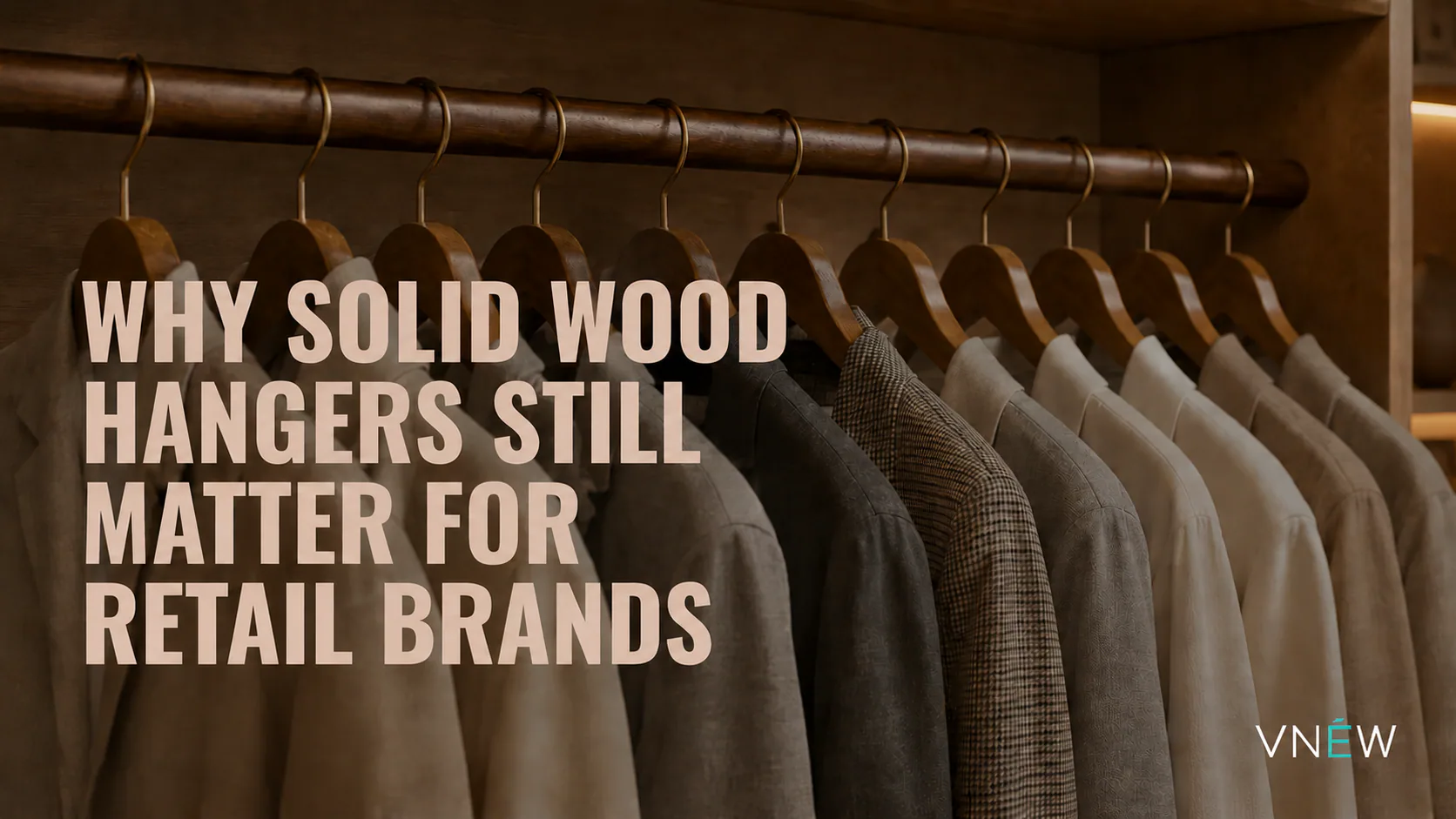
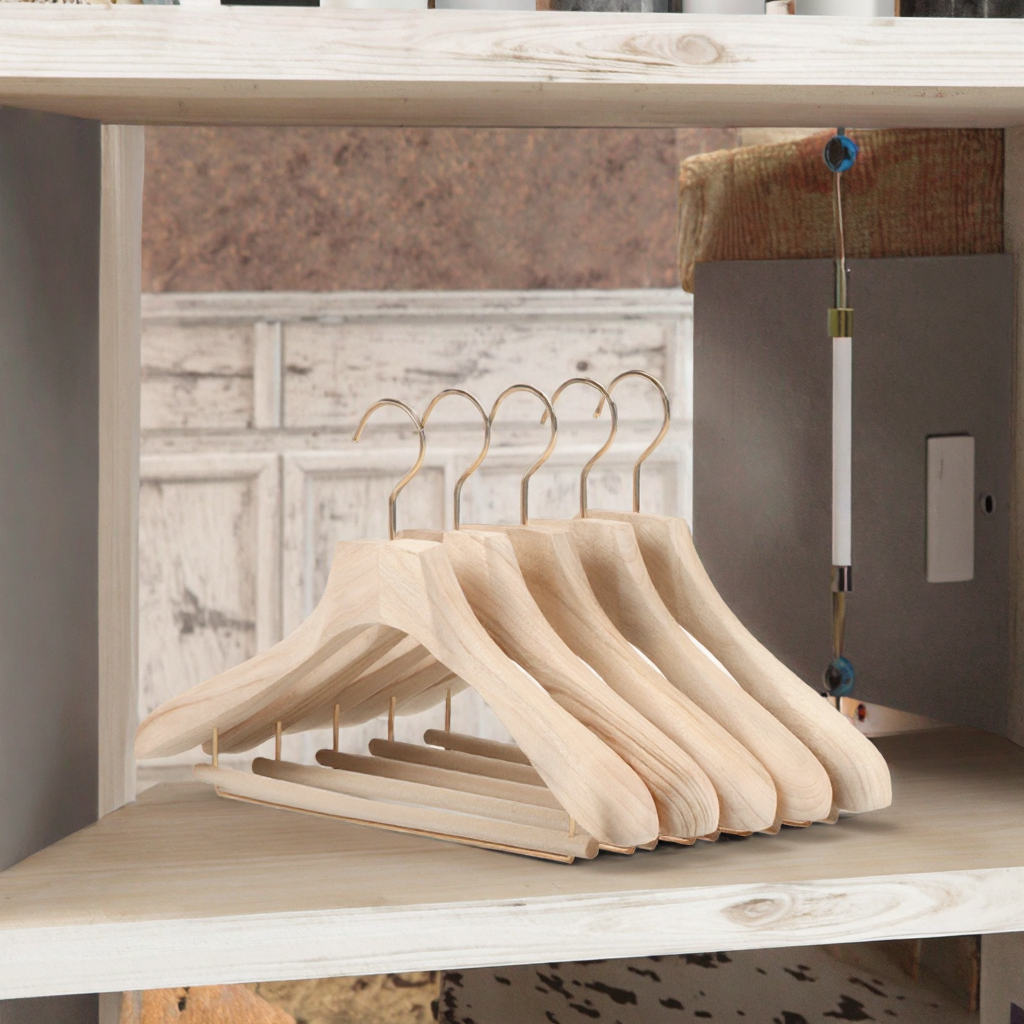
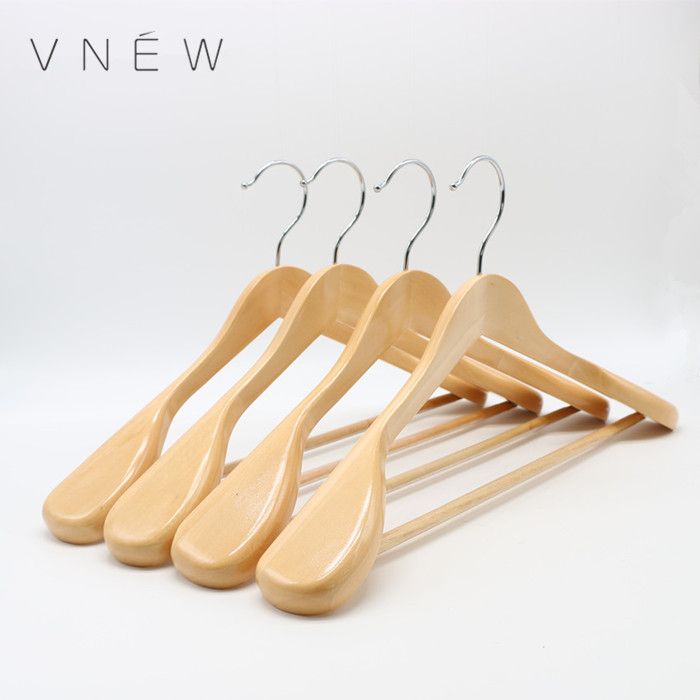
Custom wooden hangers are worth considering for tailored garments and coordinated retail displays, particularly where a shaped body or broader shoulder is required. Wood alone does not guarantee support: the profile, width and construction still need to match the garment.
Check the hanger inside the actual jacket. Look for shoulder overhang, distortion around the sleeve head and pressure points under the collar. Inspect the underside and trouser bar for rough areas that could catch fabric. For clip models, check pad contact and holding pressure with the intended waistband.
Compare wooden hangers by garment application before choosing stain or logo treatment. Natural grain can vary, so approve an acceptable finish range as well as a reference sample; a photograph alone is a weak color standard.
Velvet and Flocked Hangers for Slippery Garments
Velvet describes the surface, not the strength of the core. A flocked finish can help grip garments, but suitability depends on the body underneath and the clothing being displayed. Ask about the core material, shoulder profile and intended load before specifying custom hangers with a flocked finish.
Use samples to assess slipping, fiber shedding and possible color transfer against the actual fabric. Check that staff can remove garments easily without stretching necklines. Lightweight tops, narrow straps and delicate linings present different challenges; one successful test does not validate the whole collection.
Metal Hangers for Slim Profiles and Coordinated Hardware
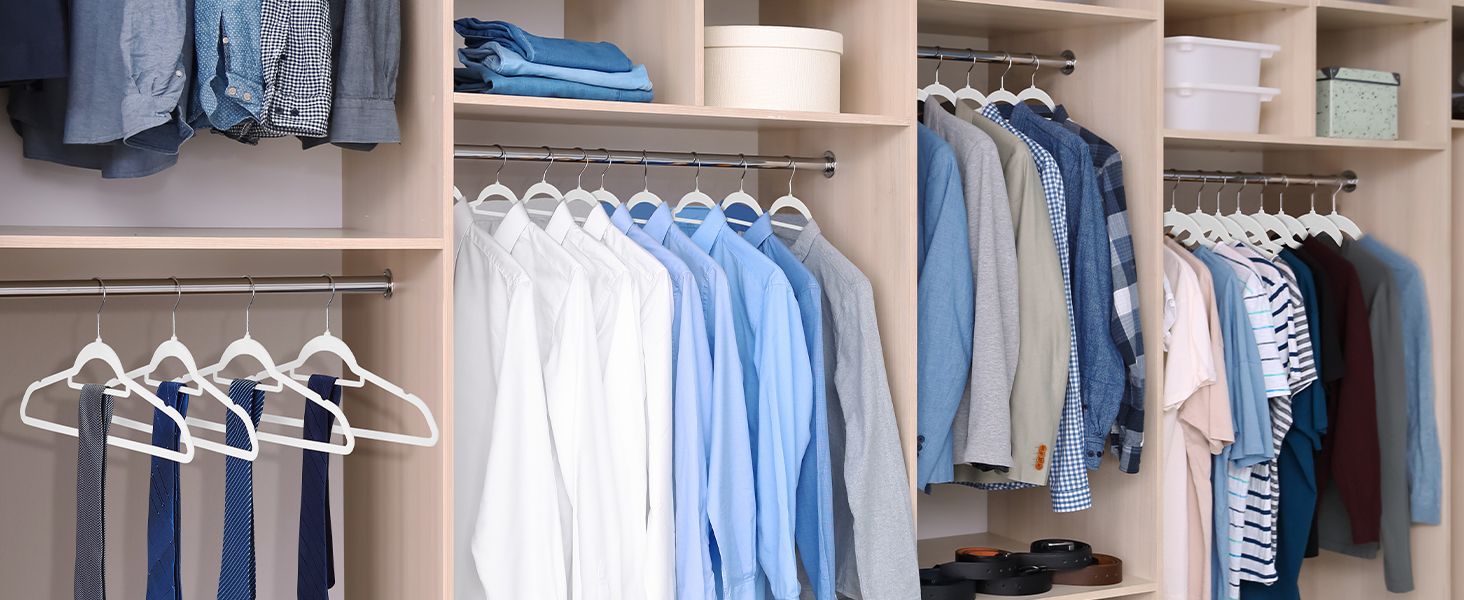
Metal can suit a brief that calls for a slim silhouette or a finish coordinated with store fittings. Compare the wire or frame dimensions, shape, joints and surface treatment. A slim hanger is not automatically suitable for a heavy coat.
When reviewing metal hangers, check hook ends, joints and clip contact points for snag risks. Test the complete hanger on your rail with your garment. Ask how its finish should be handled and cleaned, especially where daily hotel use or humid storage conditions are relevant.
Key Factors When Ordering Bulk Custom Hangers
Define the MOQ at SKU Level
For bulk custom hangers, ask whether the minimum order applies to the total purchase, each body model, each finish or each logo variation. Separate minimums may also apply to customized packaging or newly developed components. A total quantity without a breakdown cannot settle these questions.
For illustration, an order of 3,000 pieces divided equally across three finishes means 1,000 pieces per finish—not 3,000 of one production specification. This is an ordering example, not VNEW's MOQ. Put your quantity split in the inquiry and request confirmation for each line.
Ask the supplier to separate sample, artwork, tooling and packaging charges from the unit price. This makes quotations easier to compare and exposes costs that may not recur on an unchanged reorder.
Turn the Custom Hanger Brief into a Specification
Use a specification sheet for each model. Include garment type, hanger width, shoulder profile, hook opening and orientation, bar or clip requirements, material, finish and intended use. Where a dimension is critical, agree how it is measured and the acceptable tolerance.
Record rail compatibility explicitly. Send rail dimensions and photographs rather than assuming that a hook fitting one fixture will fit every store. Include the heaviest or most difficult garment in sample testing, not only the easiest item to display.
Decide which requirements are essential and which can change. Keeping an existing body while adjusting the finish may be an acceptable compromise; removing a functional feature merely to preserve a logo treatment usually is not.
Approve the Logo on the Actual Surface
For a custom hanger logo, ask which decoration methods are suitable for the selected material, geometry and finish. Printing, engraving and separate branding components are options to discuss, not processes that work interchangeably on every hanger.
Supply vector artwork, the intended position and the finished logo dimensions. Request a physical sample to assess contrast, small lettering and placement. A screen mockup cannot show how wood grain, curvature or a textured coating affects the result.
For customized hangers with a subtle logo, judge legibility at a normal viewing distance on the rail. The largest possible mark is not always the clearest or most appropriate choice.
Separate Sample Approval from Production and Shipping
Ask for a schedule with distinct stages: artwork confirmation, sample preparation, buyer review, production, inspection, dispatch and transit. Confirm what starts the production clock and what happens if a sample needs revision. Do not treat an estimated production period as a delivered-to-store date.
Approve a physical custom hanger sample against written criteria: garment fit, agreed dimensions, finish, logo, hook operation, clip performance and packing. Keep a labeled reference sample with the supplier and another with your team. Record changes with version numbers so an old drawing cannot silently become the production instruction.
Compare Packed Orders, Not Just Unit Prices
Request carton quantities, dimensions, gross weight, protective packing and delivery terms alongside the price. Hangers occupy space, so a cheaper unit quotation does not necessarily mean a cheaper delivered order. Compare freight quotations using the same quantity, destination and packing assumptions.
Check whether the proposed packing protects hooks, finishes and branding during handling. If cartons will be distributed directly to stores, agree model labels and counts that help receiving teams identify the contents without opening every box.
How to Choose the Right Custom Hanger Manufacturer
A capable custom hanger manufacturer should be able to explain which design choices affect production and how the approved specification will be controlled. A low quotation is not enough if the supplier cannot clearly identify what it includes.
Ask each supplier for the same evidence:
- A drawing or specification that matches the quoted model, including critical dimensions.
- A sample made with the proposed material, finish and branding process, with any substitutions disclosed.
- An inspection plan identifying what will be checked and how results will be recorded.
- A packing specification, written delivery terms and a process for reporting nonconforming goods.
- A reorder reference covering artwork, finish and approved revisions.
If a certification or material claim matters to your procurement policy, request documentation covering the relevant product and supply chain. A logo in a brochure is not sufficient evidence of scope or validity.
For customized hangers, test repeatability as well as appearance. Ask how a replacement order will be matched and what changes would require a new approval. Consistency matters when an additional store opens or a hotel needs replacements alongside its existing stock.
Design Ideas for Personalized Hangers for Retail
These are illustrative briefs, not claimed VNEW customer case studies. Personalized hangers for retail should express the brand without making garments harder to handle.
Tailoring boutique: Explore a shaped wooden body with a restrained logo and hardware coordinated with the fixtures. Validate the shoulder profile on both a light jacket and the heaviest tailored garment before standardizing the model.
Mixed fashion collection: Use coordinated colors and branding across different functional bodies. Knitwear, strappy tops and trousers need not share one hanger shape simply because they share a brand identity. Custom hangers can look consistent without being structurally identical.
Boutique hotel: Prioritize smooth handling, rail compatibility and a repeatable finish. Decide separately whether trouser bars, clips or anti-theft hooks or rings are needed. Test the custom hanger in an actual wardrobe with guest-use garments and the housekeeping team involved.
Custom Hanger FAQ
What Is the Minimum Order for Custom Hangers?
There is no single minimum that applies to every material, design and decoration method. Request a model-specific MOQ and confirm whether it applies per color, finish, logo or packaging version. Include your quantity split; do not assume a combined total meets every production minimum.
Can I Add a Logo Without Developing a New Hanger Shape?
Ask whether an existing body can accept the proposed branding. This can reduce the scope of development compared with a new structure, but feasibility still depends on the surface and logo requirements. Approve the decorated sample, not only an image of the undecorated model.
Are Custom Wooden Hangers Better Than Velvet or Metal?
Not universally. Match the shape, surface and construction to the garment and handling routine. Wood can accommodate shaped shoulders; flocked surfaces can help grip; metal can offer a slim profile. Compare physical samples with the same garments rather than ranking materials by appearance alone.
How Long Does a Custom Hanger Order Take?
Obtain a current schedule for your specification. Separate sample development, approval, production and shipping, and confirm any dependency on artwork, components or payment milestones. Ask for the dispatch target and the estimated arrival separately, especially when planning a store opening.
What Should I Send to Get a Useful Quotation?
Send garment types, reference photographs, critical dimensions, quantities by model, preferred material and finish, logo artwork, packaging needs and destination. State the required arrival date. Mark unresolved choices clearly so the supplier can quote alternatives instead of guessing.
Start with a Clear Brief, Then Refine the Details
The right custom hanger starts with a garment, a display environment and a specification that both buyer and supplier understand. Material and branding choices become easier once those practical requirements are clear. Keep the approved sample and written specification together so your next order starts from an agreed reference.
Explore VNEW's capabilities as a custom hanger manufacturer and share your garment types, quantity breakdown and preferred finish to begin a focused discussion about your custom hangers.
Share this story
Save or forward this article to your sourcing and merchandising team.