Article overview
Space-saving hangers for small closets solve different problems. Slim individual hangers can reduce the space occupied by empty hanger bodies; multi-tier designs arrange garments at different heights. The benefit depends on the clothing and cupboard fittings already in place. Before choosing a set for a home-storage range, compact hotel wardrobe or small clothing display, identify the limiting dimension and check how easily each garment can be removed.
Choosing Space-Saving Hangers for Small Closets
Storage remains a useful design topic: IKEA's Life at Home Report 2026 reports that 37% of respondents plan to update their storage within six months. This is a broad storage intention, not a measure of demand for a particular hanger.
The practical question is more specific: are you short of rail length, hanging height or depth? A closet can look full while still having unused height below short garments. Another may have room along the rail but a shelf immediately below it. These require different arrangements.
Measure three usable spaces before comparing designs:
- Rail length: the section actually available after brackets, dividers and other stored items are allowed for.
- Clear height below the rail: from the rail to the first shelf, drawer or other obstruction. Compare this with the complete hanging drop of the longest garment.
- Depth with the door closed: including the garment shoulders and any hardware projecting forwards or backwards.
Check the doorway too. A hanger that fits inside may still be awkward to insert or remove through a narrow opening.
Slim Hangers: Less Body Thickness, Same Clothing
A thin body is relevant when bulky empty hangers occupy unnecessary rail length. It does not make a padded jacket, gathered sleeve or thick waistband thinner. On a rail loaded with clothes, the fabric can set the spacing long before the hanger bodies touch.
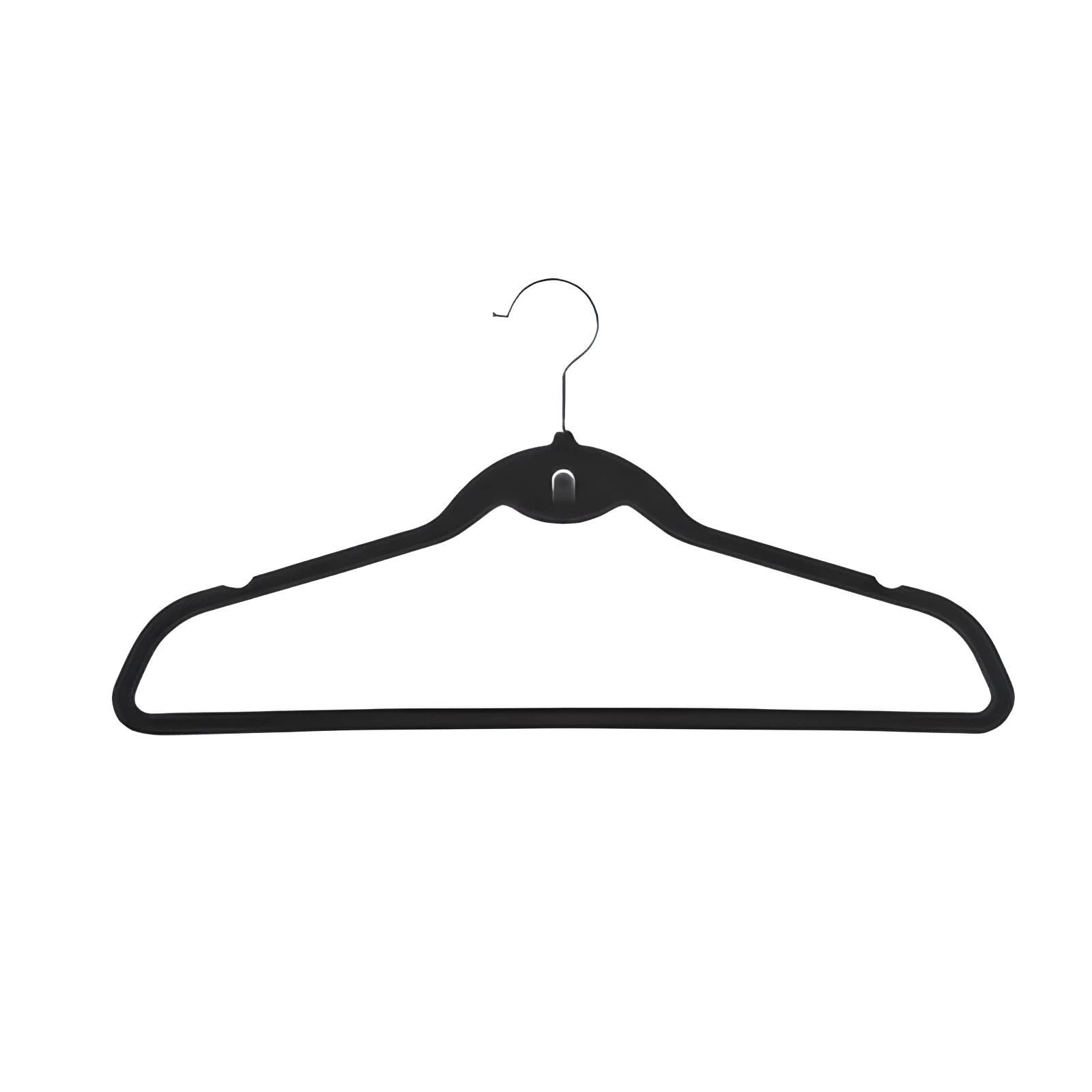
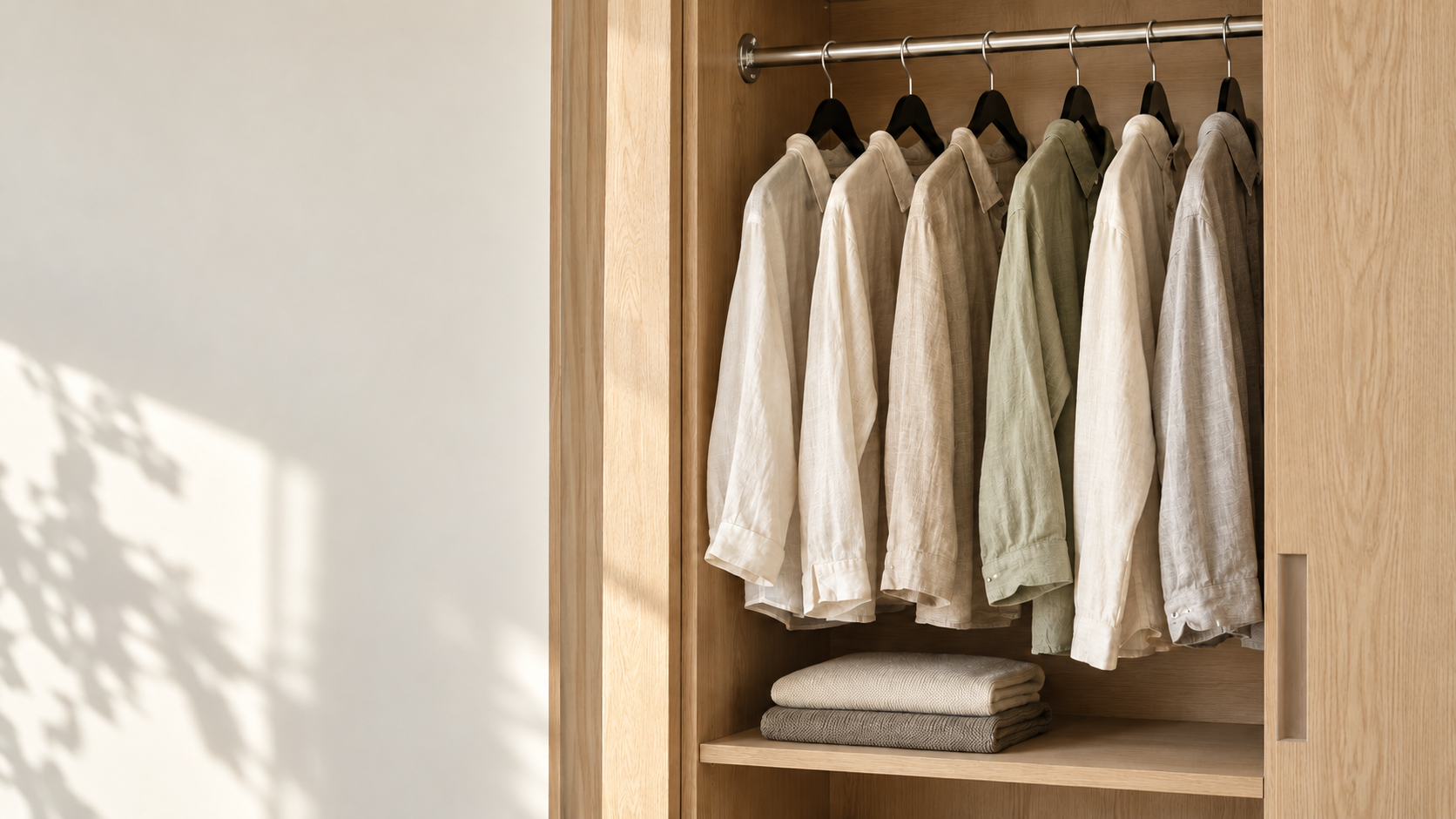
VNEW's black flocked hanger is listed at 44.5 × 23 × 0.5 cm. The 0.5 cm is a recorded product dimension, not a promise that hangers carrying clothes can be placed 0.5 cm apart. Check the shoulder shape, neckline clearance and surface against the intended clothing. Confirm the neck attachment's compatibility and load requirements before using it to link hangers.
For shirts and light tops, a consistent slim format may make the rail easier to scan and handle. Structured jackets need the right shoulder support even when that takes more room. Use a thicker or shaped hanger where the garment requires it, rather than squeezing every item onto the narrowest body.

Multi-Tier Hangers: Use Height, Check Access
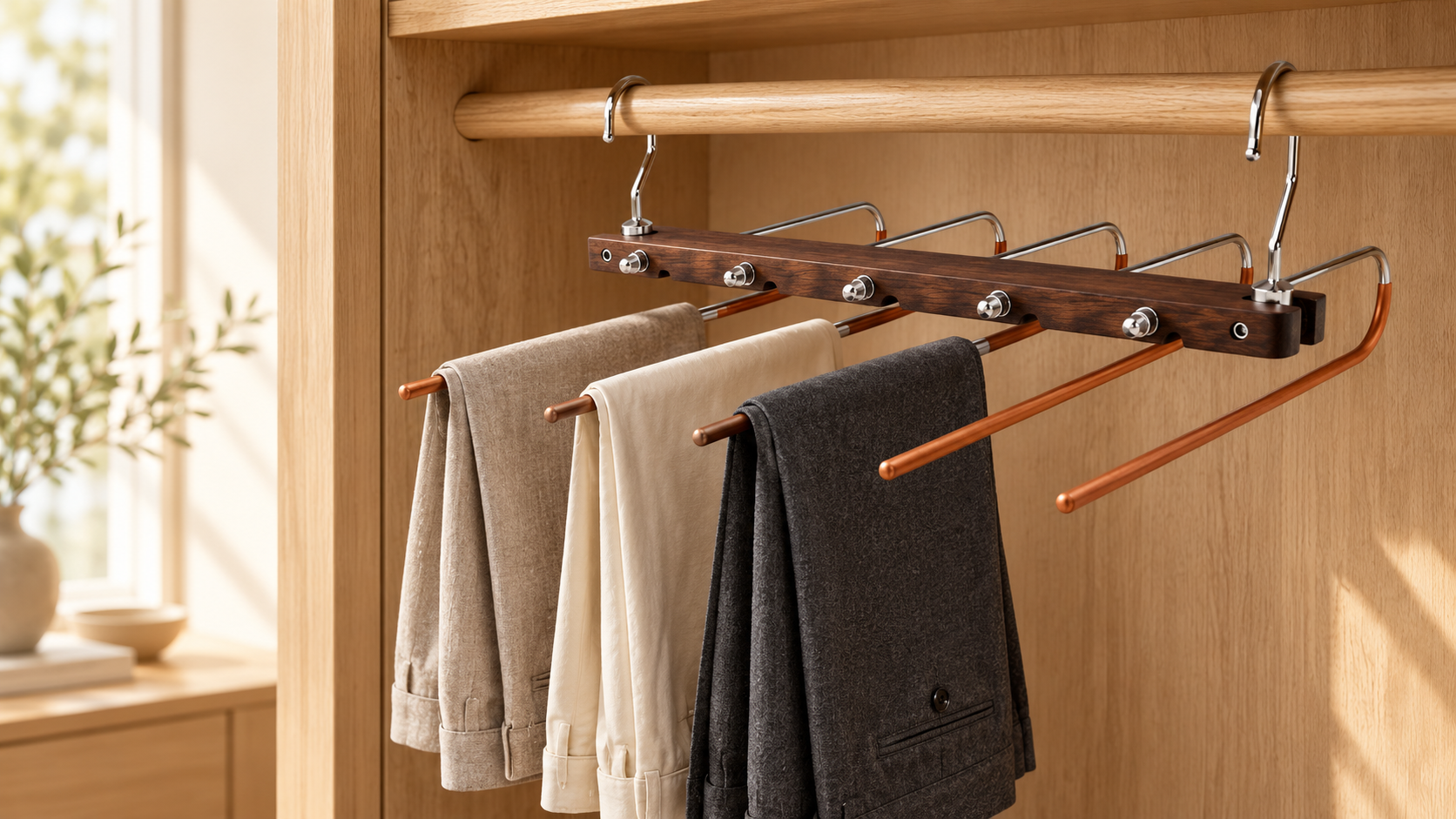
A tiered trouser hanger places several support points below one another. It can make unused vertical space useful, but the lowest garment still needs clearance. Count the complete hanging drop, including the hook, frame and clothing, rather than only the empty product height.
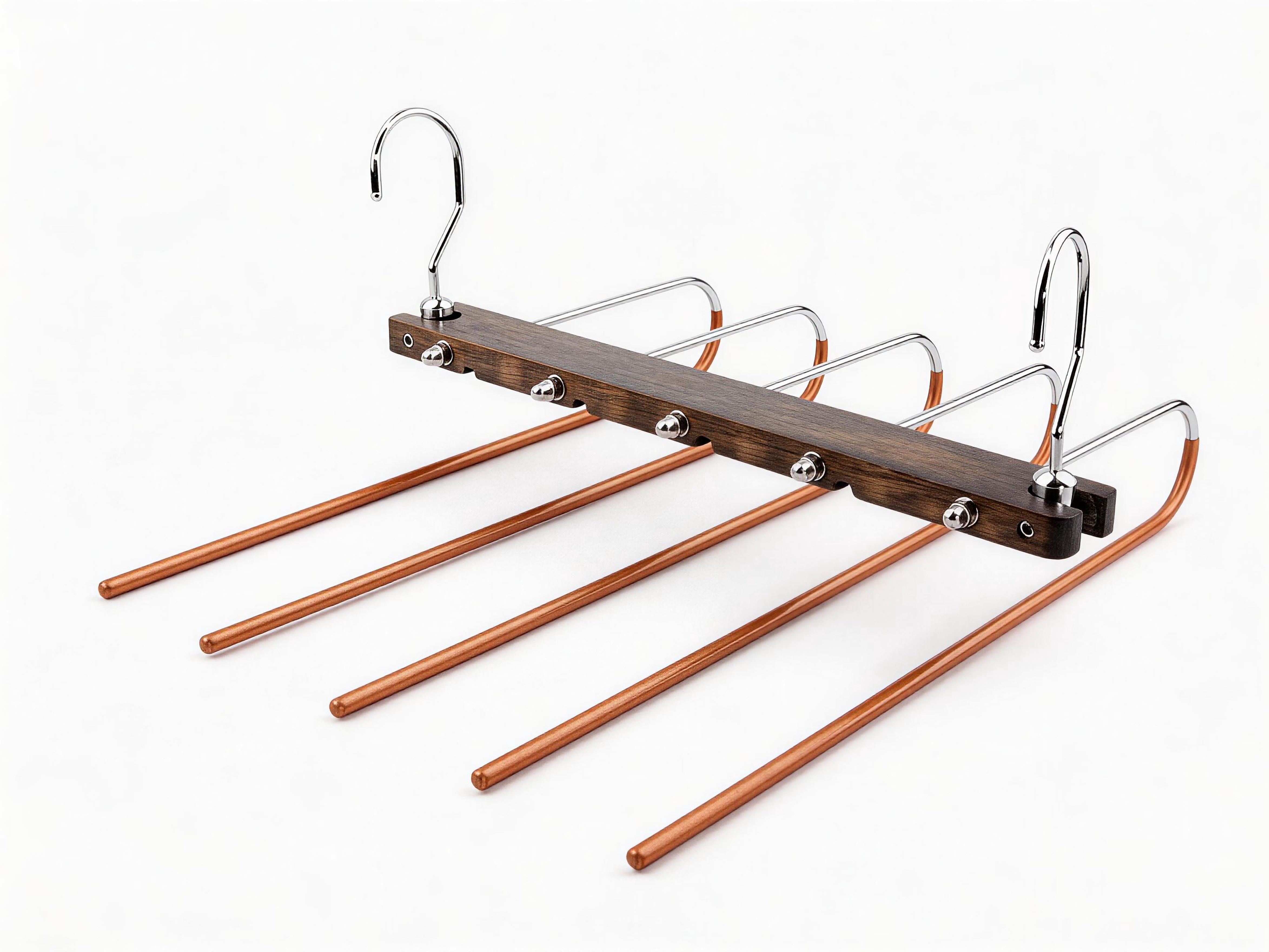
VNEW's five-bar trouser organiser has listed overall dimensions of 31.2 × 32.5 cm and bar spacing of approximately 5.3 cm. Its central support is beech wood. These figures identify the model; they do not establish the free gap between folded trousers, the usable length of each bar or a combined load rating.
Check the proposed arrangement on the actual rail. Two visible suspension hooks alone are not enough to infer a conversion mechanism or approve every hanging orientation. Ask for confirmation of the intended configuration and test the complete sample with garments.
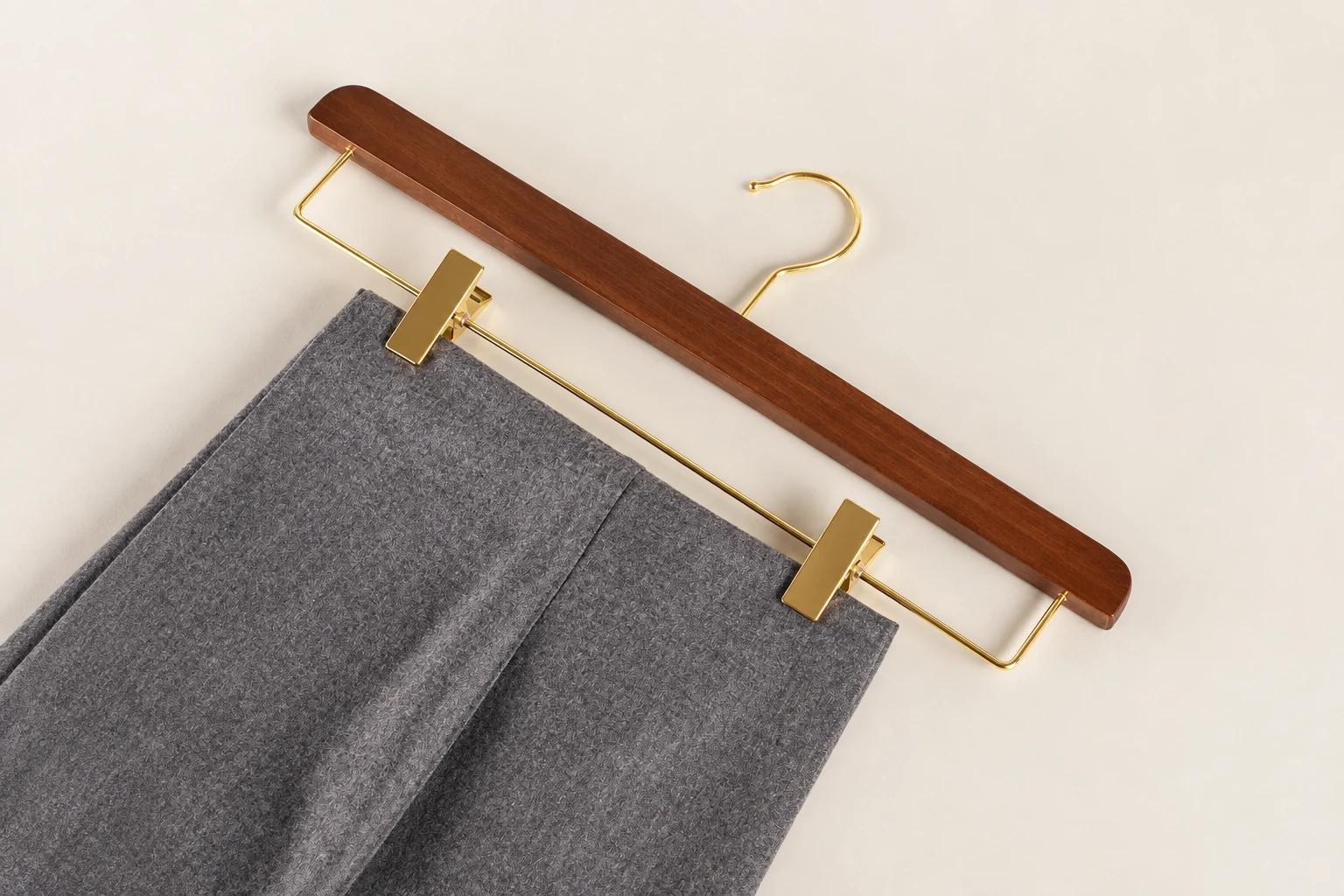
Folded trousers and garments held by waistband clips also behave differently. Folding changes the hanging length and creates a bend where the fabric rests on the bar; clipping keeps more of the garment extended. Neither arrangement suits every fabric. For frequent use, test removing a middle garment without disturbing the others. A layout that holds more pieces but makes daily access difficult may be a poor trade-off.
Compare the Same Clothes on the Same Rail
Evaluate space-saving hangers for small closets with a repeatable comparison, not an empty-product photograph. Use the same representative clothing, rail section and access requirements for each arrangement.
- Photograph the starting layout and record the garments used, including a bulky item and the longest relevant piece.
- Measure the rail length occupied without compressing the clothes more tightly in one arrangement.
- Measure the gap beneath the lowest garment and check that the door closes without pushing against the fabric.
- Remove and replace a garment from the middle. Record how many other items must move and whether the whole organiser needs lifting.
- Inspect shoulders, waistbands and folded areas after the same agreed hanging period. Record any marks, slipping or distortion rather than assuming protection from the finish.
Keep these observations with the model reference. Repeat the check if the garment mix or fixture changes. The comparison measures your arrangement; it is not a universal percentage saving or a structural load test.
Match the Arrangement to Everyday Use
Slim individual hangers are a useful starting point for light garments that need independent access. Tiered supports deserve consideration for folded trousers where there is spare height and acceptable access. Long dresses above a low shelf, tightly packed coats and garments that should not be folded may need another layout entirely.
The same reasoning applies to compact hotel wardrobes and small retail displays. Check guest or staff handling, visibility and ease of putting garments back as well as the number of pieces stored. An orderly rail should remain usable when it is fully loaded. For garment fit and measurement points, consult the hanger size guide.
Frequently Asked Questions
Do slim hangers always make room for more clothes?
No. Their thin bodies take up less space when empty, but the garments may determine the final spacing. Compare the same clothing at the same level of compression and retain enough room for removal and suitable shoulder support.
Are multi-tier hangers better for every small closet?
No. They need sufficient height below the rail and access to each level. Check the bottom garment against shelves and drawers. A shallow or low compartment may benefit more from independent hangers or a different storage layout.
Can I calculate capacity from hanger thickness?
Thickness alone cannot predict capacity with clothes in place. Sleeves, waistbands, shoulder profiles and access gaps also occupy space. Measure a representative section with garments hanging instead of dividing rail length by an empty-hanger dimension.
Does a double hook prove horizontal and vertical use?
No. Confirm the model's intended arrangements and instructions. Check how the hooks sit on the rail, garment access and the complete sample in the proposed position. A photograph is not evidence of a tested conversion system or combined load limit.
What information helps a storage retailer or hotel buyer select hangers?
Provide rail length, clear hanging height, closed-door depth, garment examples and the intended handling routine. Add the quantity and model references if you need a quotation. Confirm load requirements, dimensions and packing for the selected configuration.
Find a Layout That Fits
For space-saving hangers for small closets, choose the arrangement that improves the limiting dimension while keeping clothes supported and accessible. Contact VNEW with your fixture measurements and garment examples to discuss relevant samples for a storage range or wardrobe project.
Buyer path
Continue from guidance to a working specification
Compare hanger options, define quantities by model and finish, then prepare the specifications needed for a quotation.
Share this story
Save or forward this article to your sourcing and merchandising team.