Article overview
Start with the garment, not the clothing-size label
Choose hanger sizes around representative garments, including the narrowest and broadest cuts. Clothing-size labels are not hanger specifications: shirts in the same size can have different shoulders. For set-in sleeves, measure between shoulder seams without stretching the fabric. Raglan sleeves and dropped shoulders need a practical fitting check because they lack the same reference points.
Treat seam measurement as a starting point. Inspect the garment for bulges, unsupported shoulders or a stretched neckline. Photograph front and side views. A jacket also needs a compatible shoulder contour; a shirt's successful fit does not establish suitability for a structured jacket.
Put hanger sizes on an unambiguous dimension sheet
Specify whether dimensions describe the finished hanger or its body alone. Mark measurement points on a drawing. If buyers use inches and the factory uses millimetres, agree one controlling unit and show the other as a conversion. Rounding must not create a second specification.
| Dimension | Define the measurement | Check on the sample |
|---|---|---|
| Overall width | Straight distance between the outer hanger ends | Support at the intended shoulder position |
| Shoulder support | Depth and contour at a marked point | Contact without visible distortion |
| Overall height | Top of hook to bottom of the finished hanger | Clearance above and below the garment |
| Hook opening | Internal opening and its shape | Placing and removing it on the actual rail |
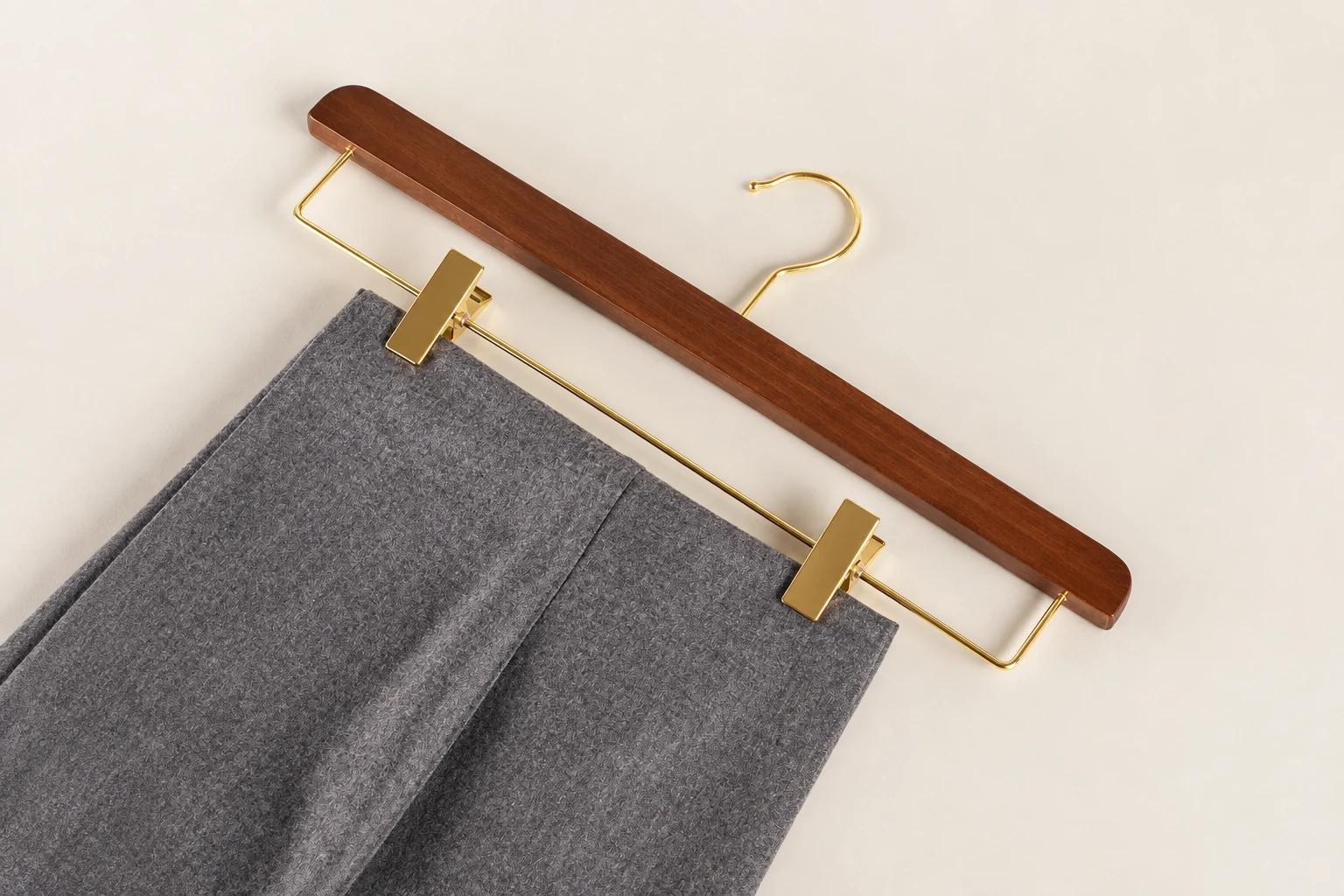
| Trouser bar or clips | Usable bar span or confirmed clip positions | Fold, hold and fabric contact |
An arc along a curved hanger differs from its straight width. “Shoulder width” might mean support depth rather than total span. Confirm the drawing with your supplier. Agree dimensional tolerances for the selected construction; this guide gives no universal tolerance.
Compare shoulder profile, material and fabric contact
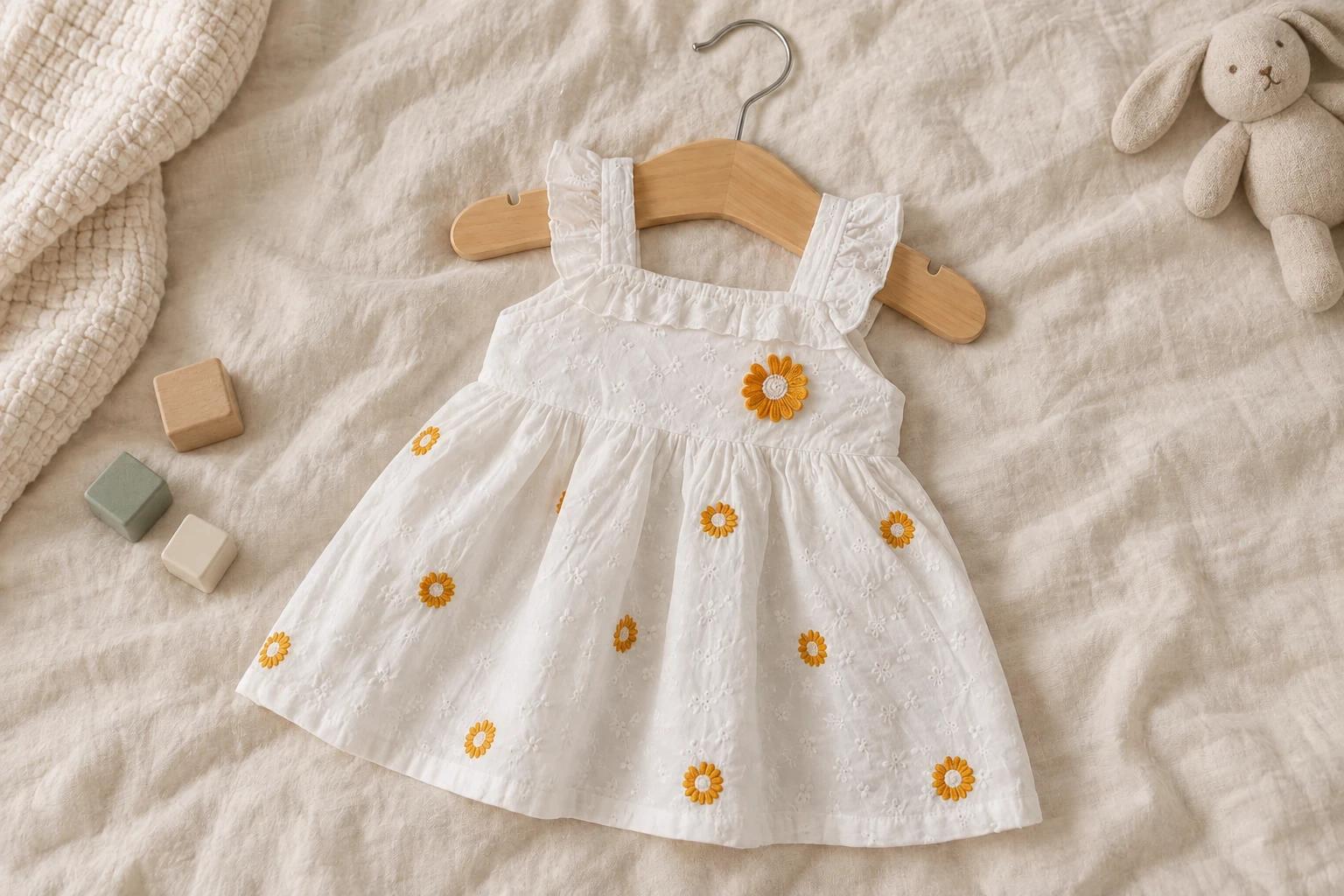
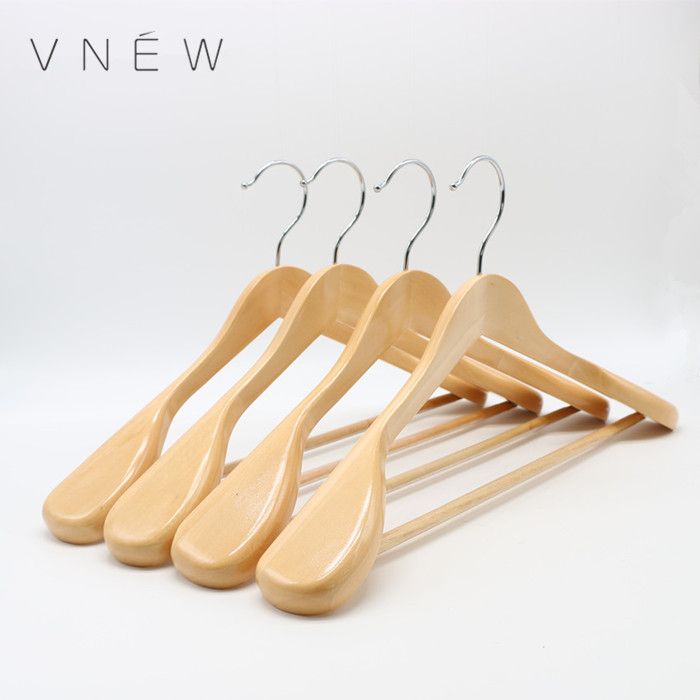
For light tops, inspect ends, strap notches and neck area against the cut. For jackets and coats, compare contour and support. Use the wooden hanger collection and a contoured wooden suit hanger as sample candidates. A broad shoulder is a configuration to test, not an automatic quality grade or universal fit.
Include delicate fabric in the comparison. Check edges, contact points and any marks after hanging. A velvet or flocked hanger offers another format to evaluate, but its surface does not establish the correct width or load capacity. Record which garment each sample was tested with. Passing a shirt check does not qualify that sample for a coat.
Measure the trouser bar and clip positions separately
On a bar hanger, measure the usable span between the side restrictions, not just the overall width. Fold the intended trousers as they will be displayed and check whether the layers are supported, the garment hangs straight and a distracting crease develops. Keep bar span and hanger width as separate entries on the specification.
For clip hangers, review waistband, fabric thickness and display position. Request any confirmed adjustment range; a photograph does not prove clips move. Test handling and contact with actual clothing. Agree a hanging period and record slipping or impressions. This buyer assessment is not a certified performance test.
Test rail clearance and the finished display
For hotel wardrobes, measure rail diameter, distance to the back wall, door clearance and usable height above the next shelf or floor. Include the intended robe or coat in the trial. Check whether the door closes without pressing on the garment and whether staff can place, turn and remove the hook comfortably. Opening width alone does not prove easy access.
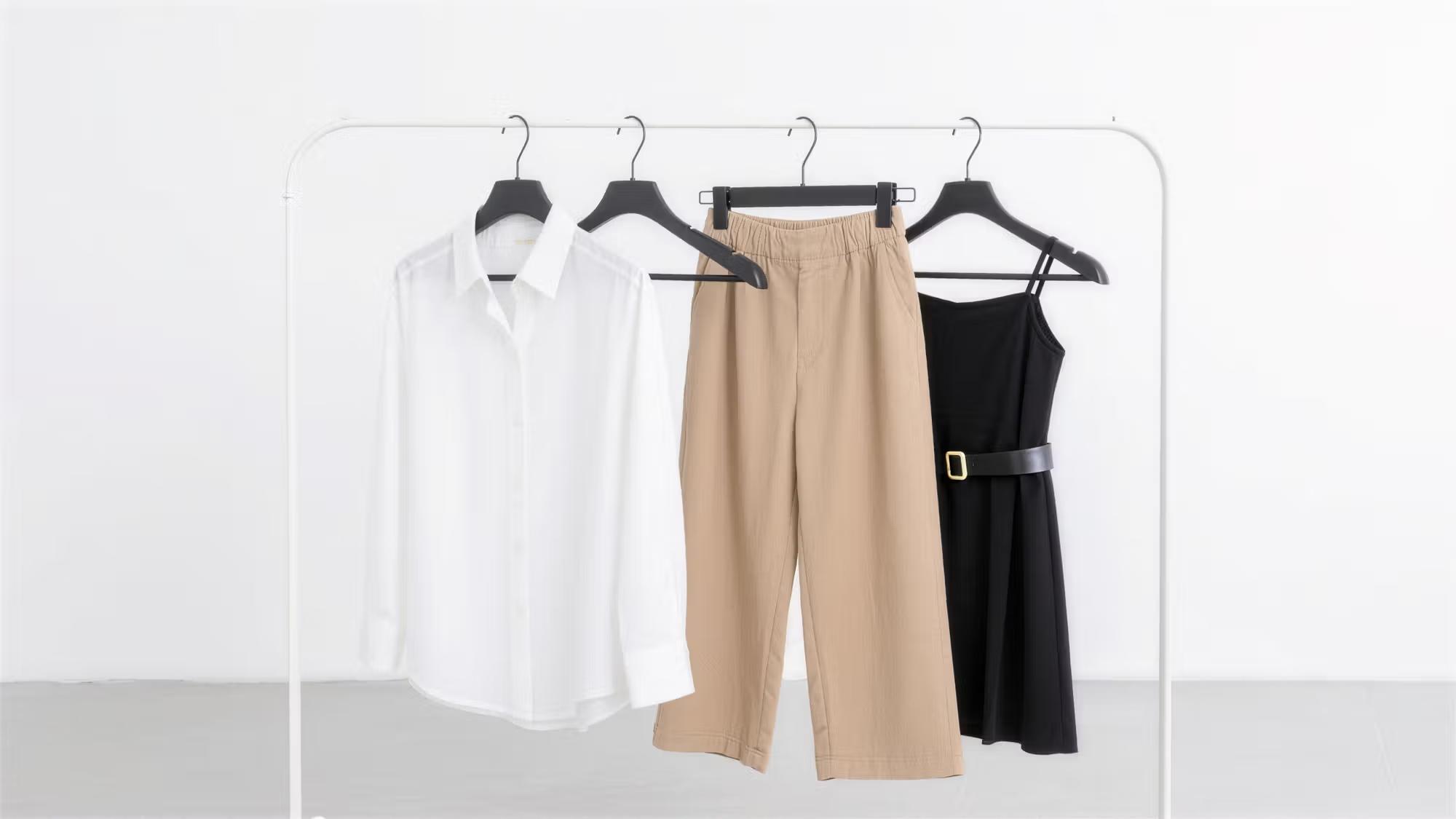
For stores, test a representative stocked rail section. A slim hanger does not automatically increase useful capacity when the clothes themselves occupy the space. Review visibility, removal and rehanging with the intended assortment. Where stores use different fixtures, check each rail type rather than treating a successful test at one location as approval for the entire rollout.
Approve hanger sizes on the complete sample
Check hanger sizes with the intended hook, final surface and confirmed bar or clip assembly. Changing components after approval can change fit. Keep the assessment short enough for buying, merchandising and operations teams to repeat:
- Identify the sample: record the SKU, drawing version, material and hardware.
- Measure to the drawing: use the same reference points, units and agreed tolerance limits.
- Hang representative garments: photograph distortion, unsupported areas or contact marks.
- Test the installation: check the original rail, door clearance and removal path.
- Record the decision: resolve discrepancies, label the approved sample and archive the drawing.
Keep the sample and drawing version for reorders. For design changes, identify fixed dimensions and those needing another trial. Agree how production measurements and discrepancies will be documented; do not invent a universal inspection rate.
Send a comparable sampling brief
An enquiry about hanger sizes should include garment types, the dimension sketch, fixture measurements and the required shoulder profile. Add quantities by SKU, photographs of the intended display and a list of unresolved points. This lets suppliers compare the same construction. Available formats, MOQ and timing remain model-specific and must be confirmed in the quotation.
Use VNEW's custom specification programme to discuss shape, hook and finish. For the wider material and ordering decisions, read the custom hanger buying guide. This measurement brief complements that guide; it does not replace the drawing or physical sample approval.
Frequently Asked Questions
Is there one standard hanger width for each clothing size?
No. Cut, fabric and shoulder construction vary within the same labelled size. Measure representative garments and check the support on a sample. Raglan and dropped-shoulder styles particularly need a practical fit assessment rather than a direct label-to-width conversion.
Are overall width and shoulder width the same measurement?
Not necessarily. Overall width is the span between the hanger ends. Shoulder width may describe the depth of an individual broad support. Mark both points on a drawing so buyer and supplier assess the same geometry.
How should a hotel check hook compatibility?
Record rail diameter, hook opening and available clearance, then try the complete sample on the original fixture. Include placing, turning and removing the hanger with the intended garment. A sufficiently large opening does not by itself establish an unobstructed handling path.
What should a clip-hanger dimension sheet include?
List the intended clip positions, any confirmed adjustment range and the fabric thickness to be held. Include the garment and waistband or strap area. Check hold and impressions on the original fabric rather than deciding suitability from overall hanger width alone.
What dimensional tolerance should apply to a bulk order?
Agree it for the selected model and measurement method. The reference points, units, allowable deviations and inspection procedure belong in the order documents, alongside the approved drawing and sample. Do not use a generic tolerance that has not been accepted for that construction.
Review your measurement brief with VNEW
Send drawings, garment photographs and fixture dimensions through request a hanger sample comparison to clarify measurements before approving the bulk specification.
Buyer path
Continue from guidance to a working specification
Compare hanger options, define quantities by model and finish, then prepare the specifications needed for a quotation.
Share this story
Save or forward this article to your sourcing and merchandising team.