Article overview
Types of Pants Hangers
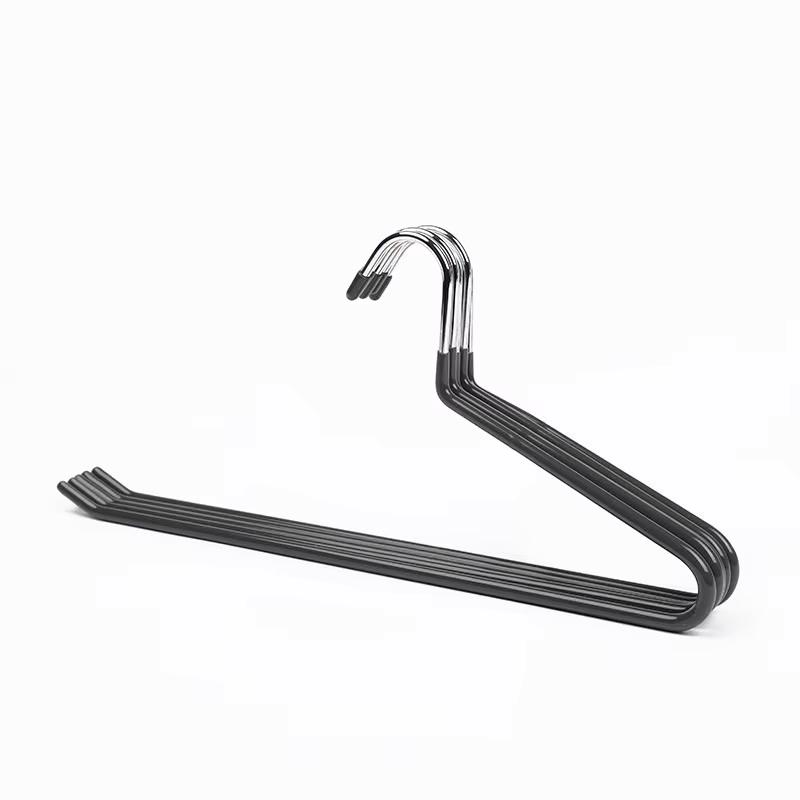
An open-sided metal bar supports a folded garment and allows it to slide on from one side. VNEW's open-sided metal model lists a 32 cm dimension, but buyers should confirm the usable bar length separately. Check the loading opening, bar profile and hanging drop with a folded garment. A black appearance does not establish a particular coating or prove resistance to slipping.
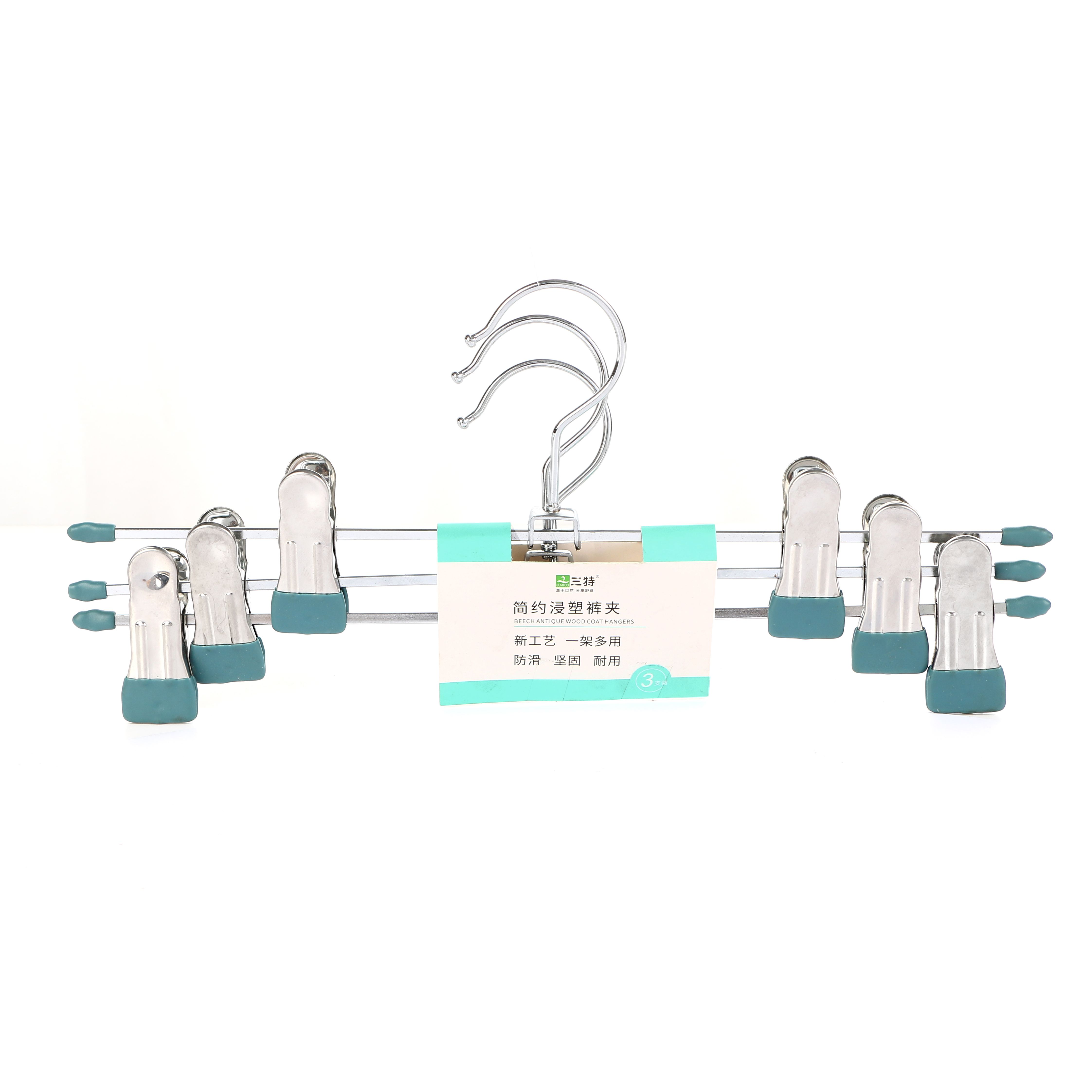
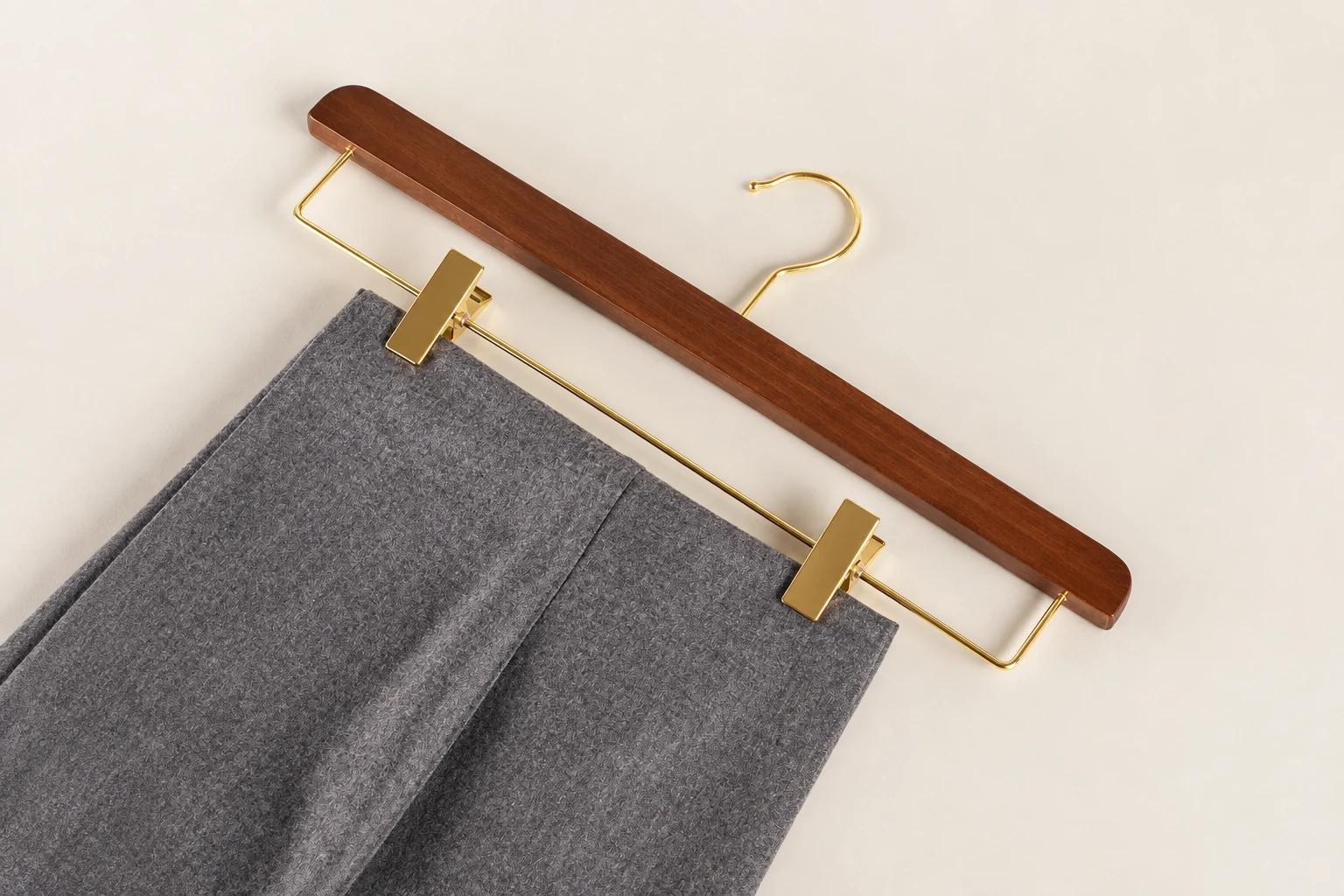
Metal clip formats suspend garments from selected waistband positions. Their usefulness depends on clip spacing, opening, spring pressure and the material contacting the fabric. Review VNEW's metal bar and clip options by function, and ask whether the selected clips move and how far. A visible protective cover is a component to inspect, not proof that it leaves every fabric unmarked.
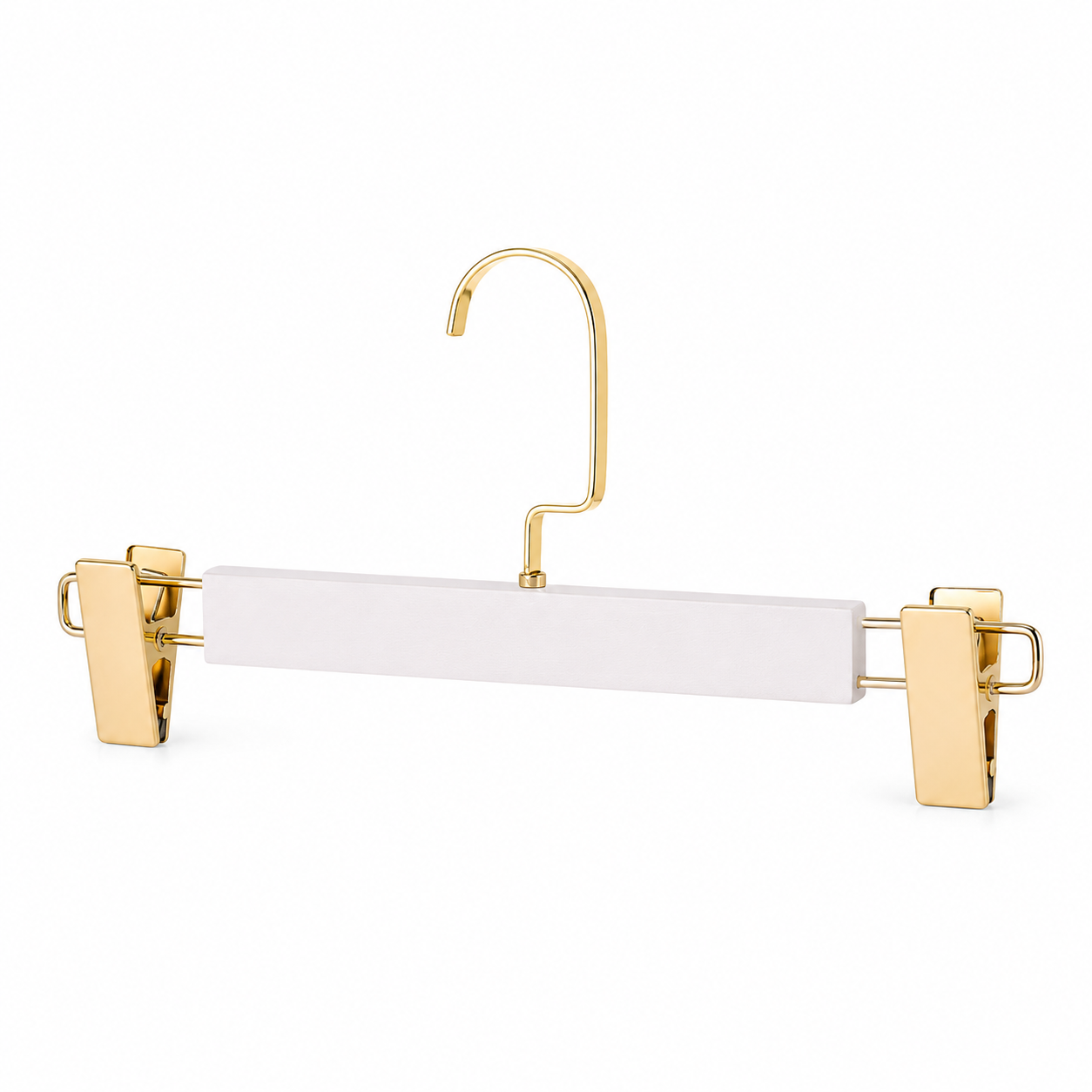
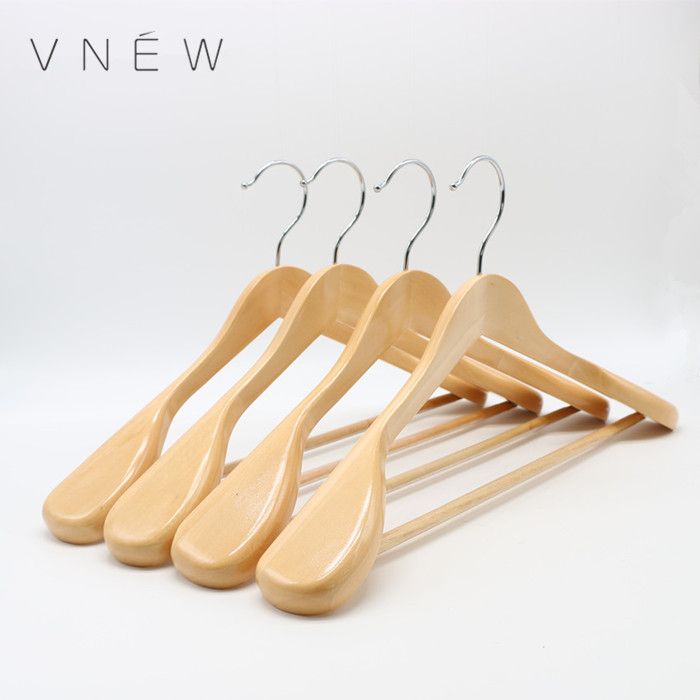
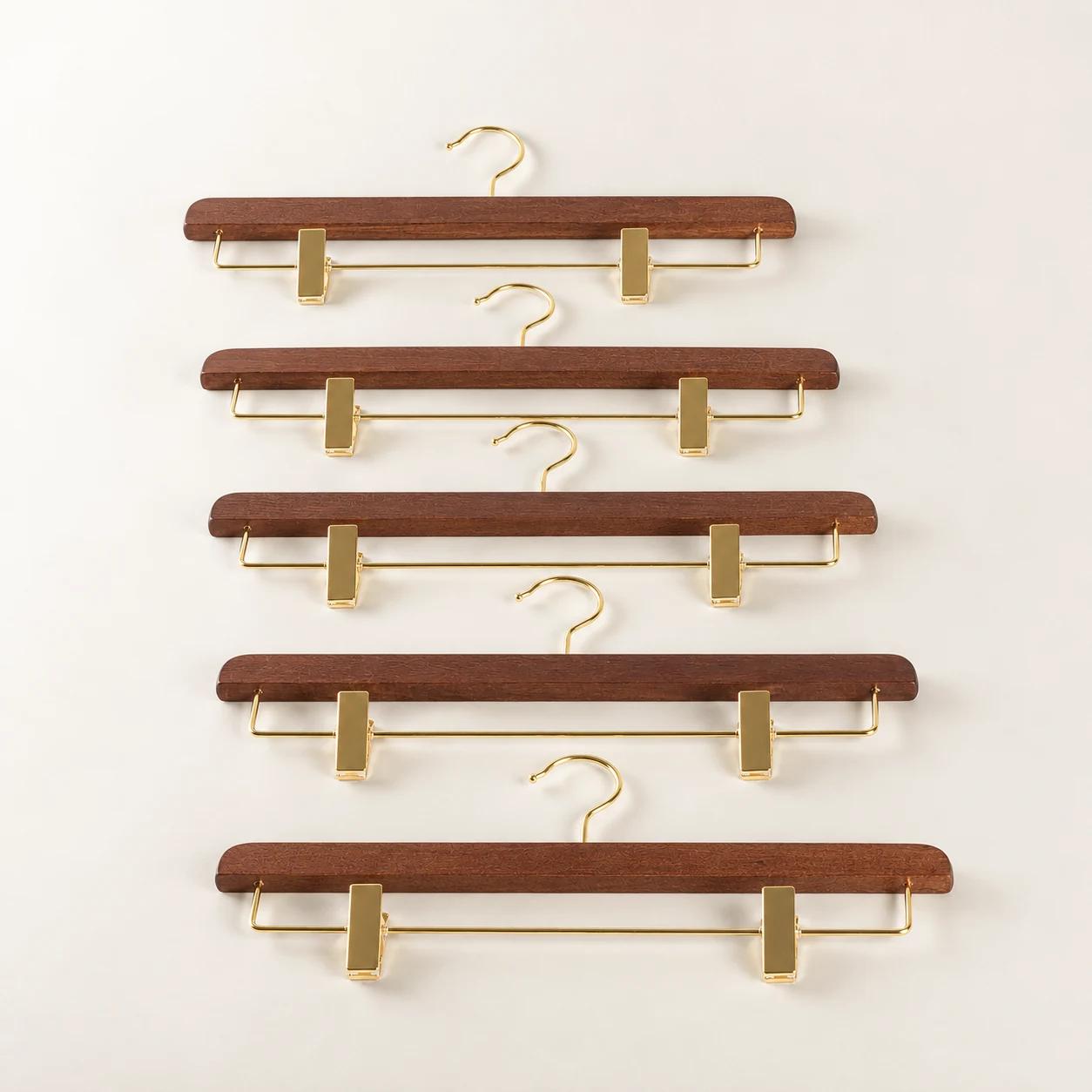
With wooden clip options, the wood body contributes shape and visual coordination while the attached hardware holds the garment. Specify both parts. Check the wood finish, connections, clip assembly and hanging height together rather than selecting solely by stain color. The actual contact pads and clip pressure still determine the garment test.
How to Choose the Right Pants Hangers
Match pants hangers to garment weight, fabric sensitivity, presentation and staff workflow. Waistband suspension keeps the garment extended, but requires enough vertical clearance and suitable clipping points. Folding reduces the hanging drop, but introduces a fold that must be assessed on the intended fabric. Test how staff load, remove and reposition merchandise on a populated rail, including the access needed at an open bar's side.
| Format | Consider when | Confirm on the sample |
|---|---|---|
| Metal folding bar | Folded presentation suits the garment and rail height | Usable length, loading access, slipping and fold marks |
| Metal clip construction | Waistband display and a metal profile fit the brief | Clip spacing, opening, contact material and holding performance |
| Wooden clip construction | Waistband display should coordinate with wooden fixtures | Wood finish, hardware connections, clip contact and overall drop |
Include the lightest, heaviest and most sensitive garments in the approval set. Check for movement under the agreed load and inspect the waistband or fold after a defined display period. Photograph pressure marks, distortion or surface transfer immediately after removal and after the agreed recovery period. Confirm acceptable results in writing. A catalog load figure cannot replace testing of the complete assembly with your merchandise.
Key Specifications & Customization
Record overall width, usable bar length or clip spacing, hook opening, material and surface finish. For clip constructions, include opening range, whether adjustment is required, and the contact-pad specification. For bar constructions, define the contact surface and the clearance needed for loading. Attach garment photographs and a drawing showing where each dimension is measured.
Request the minimum by model, finish and color. The listed MOQ for VNEW's open-sided metal model is 1,000 pieces; confirm the current quotation for the selected configuration. Do not transfer that minimum to wooden or clip constructions. Separate existing designs from changes to geometry or hardware, and ask whether quantities can be combined. Review the material, MOQ and design requirements before sending the enquiry.
Provide logo artwork, size and placement, then confirm a method compatible with the chosen body or hardware. Approve the mark on the finished sample. Specify units per pack and carton, separators, hook protection, carton labels and destination codes. Ask for packing photographs showing how surfaces and clips are isolated during transit, rather than approving only an outer-carton image.
Sourcing from a Reliable Supplier
Before approving pants hangers for production, inspect the full construction. On metal versions, check joints, edges and finish consistency. On wooden versions, inspect the underside, surface and hardware connections. Operate clips and hooks repeatedly under an agreed inspection procedure and compare garment contact with the approved sample. Define which defects require rejection or correction, and retain the sample, photographs and signed specification together.
Build the delivery schedule from sample review, any revisions, production, inspection, packing and freight. Confirm the start condition for each stage and who authorizes changes. Keep the model, finish reference, artwork revision and carton instructions attached to repeat orders. If a component changes, request evaluation before shipment. These records help your team compare deliveries and give VNEW a precise basis for quotations across its metal and wooden lines.
For pants hangers matched to your retail assortment, review VNEW's metal bar and clip options and wooden clip options. Send garment details, the preferred hanging method, quantities and delivery requirements to request a model-specific quotation and sample plan.
Frequently Asked Questions
When should buyers choose clips instead of a folding bar?
Choose clips when the brief calls for extended waistband presentation and the garment tolerates the selected contact pressure. Choose a bar when folding suits the fabric and display. Test both methods if the merchandise combines delicate surfaces with heavier construction.
What should buyers check when sourcing for heavier garments?
Check the complete assembly with representative garments: body or bar deformation, hook stability, connections, clip holding and surface contact. Agree the test load and duration before approval. A material label or isolated component rating does not establish finished-product performance.
How should clip contact be tested on delicate fabrics?
Use samples of the actual fabric, waistband construction and trims. Agree clip placement and display duration, then inspect pressure marks, snagging, slipping and transfer after removal. Record results and compare alternative pads or constructions where the selected contact is unsuitable.
Can different finishes or logo designs share one minimum order?
Possibly, but this requires confirmation for the selected models. Finish batches, artwork setups and packaging can create separate minimums or charges. Request an itemized quotation by configuration and ask exactly which quantities may be combined before allocating the order.
What should be included in a quotation request?
Include garment type and weight, suspension method, dimensions, material, finish, contact requirements, logo artwork and quantity by configuration. Add packing rules, destination and required arrival date. Identify the sample tests and approval records needed before production can proceed.
Buyer path
Continue from guidance to a working specification
Compare hanger options, define quantities by model and finish, then prepare the specifications needed for a quotation.
Share this story
Save or forward this article to your sourcing and merchandising team.