Article overview
Define What Sustainable Hanger Materials Must Do
Set the application before comparing materials: tailored jackets on a store rail, trousers held by clips or repeated handling in a hotel wardrobe. Record garment dimensions, weight, contact points, rail clearance and how staff move the hanger. Compare options performing the same job. A thin format that does not support the planned garment is not an equivalent substitute merely because it uses less material.
When evaluating sustainable hanger materials, state the purchasing objective precisely. Is it a documented wood-sourcing claim, verified recycled content, fewer replacements or a collection route available at your stores? Keep those objectives separate in the brief. A space-saving profile is a construction choice, not another material alongside wood, plastic and metal. Rail-density observations need actual garments and measured clearance, not a photograph of empty hangers.
Identify the Actual Model and Material Components
Build a component record for each SKU: body, hook, bar, clips, coating, flocking and adhesive where applicable. Identify what the supplier has documented and what remains unknown. For the wide-shoulder solid-wood formats, the current record names solid hardwood. It does not establish a particular wood species or an FSC claim for every supplied variant; request those separately for the quotation.
The black ABS clip hanger is recorded as ABS plastic with a metal rail. ABS identifies the polymer, not whether its feedstock is virgin or recycled. The black flocked hanger with neck attachment lists ABS plastic, velvet and metal. Its surface description does not make the whole article textile, biodegradable or universally recyclable.
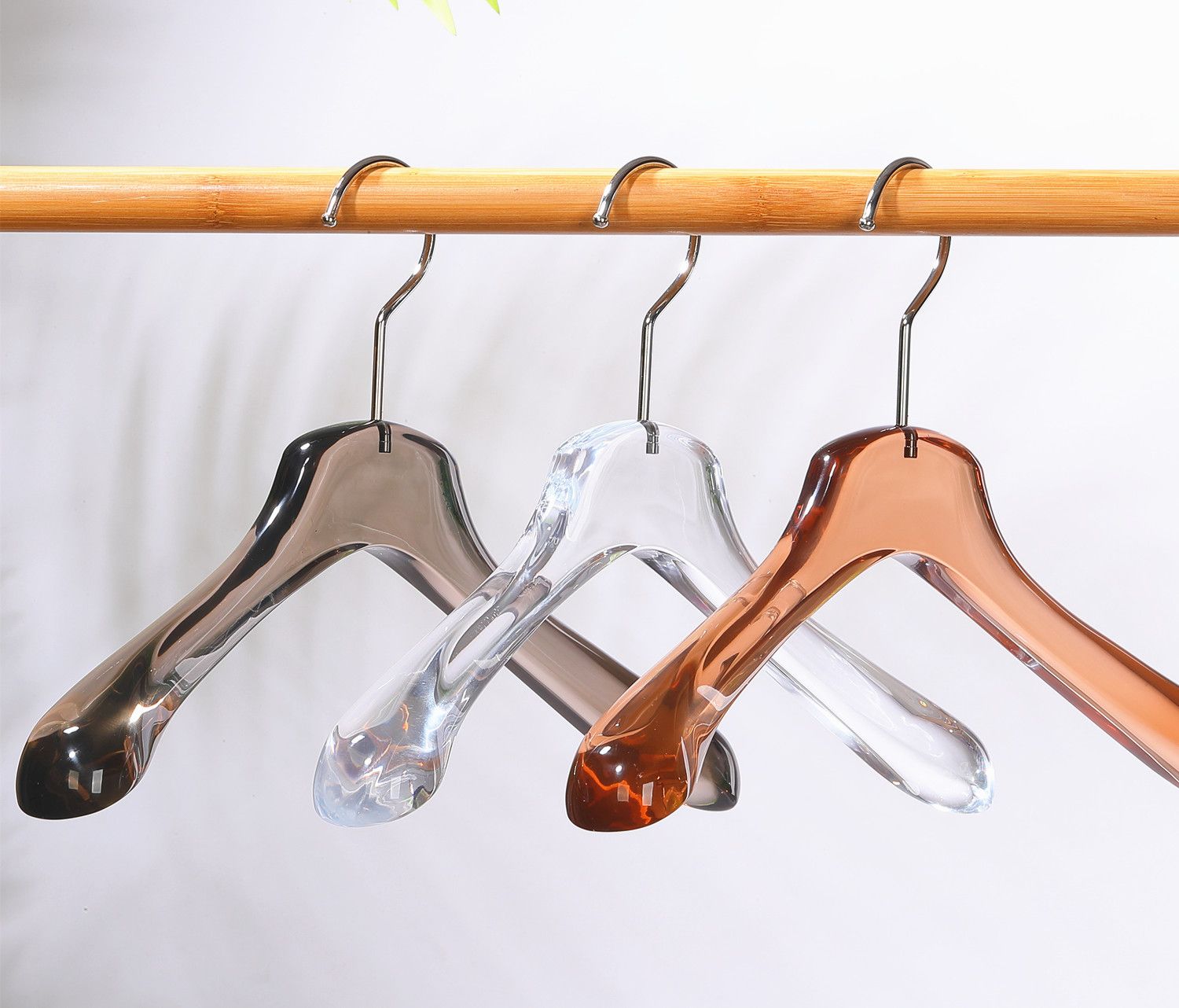
Use the photograph to locate components, then obtain written specifications for the offered version. Different hook finishes, clip assemblies or surface treatments can change the bill of materials. Do not transfer evidence from a similar-looking model. Keep model code and specification revision beside every supporting document.
Check the Scope of Sourcing and Certification Claims
For sustainable hanger materials with a proposed FSC claim, ask for the relevant certificate or licence identifiers, holder, current status, product scope and the claim applying to the supplied goods. Consult the official FSC certificate-search guidance, then reconcile the result with the supplier and transaction documentation. A corporate logo or unrelated certificate is not sufficient evidence for the quoted SKU.
Certification of forest-based sourcing is not a comparative carbon assessment of the finished hanger. If you need a carbon comparison, request its method, boundaries, reference product and supporting data. Do not infer lower emissions from the words “wood”, “natural” or “certified”. Missing lifecycle data should be recorded as missing, not replaced by a marketing conclusion.
For recycled-content claims, ask which component is covered, the stated proportion, feedstock description, applicable verification and batch linkage. Distinguish recycled content from recyclability: one concerns the input material, the other an actual end-of-life route. A document covering a resin supplier must be connected to the offered hanger before you use it in product communication.
| Claim or decision | Evidence to request | What cannot be inferred |
|---|---|---|
| Wood sourcing | Exact variant, certificate scope and transaction claim | A lower-carbon finished product |
| Recycled content | Covered component, proportion and batch-linked evidence | Every component is recycled |
| Flocked surface | Substrate, surface composition and relevant documentation | Universal biodegradability |
| Repeat use | Agreed handling trial and replacement records | A fixed service life |
| Packing choice | Approved inner pack, carton and arrival check | Damage prevention without testing |
| End-of-life route | Destination collector and accepted configuration | Worldwide recyclability |
Record Use, Handling and Replacement Evidence
Test the proposed sample with the garments, rails and cleaning method it will encounter. Agree observation periods and acceptance criteria with the supplier. Record shoulder contact, clip marks, surface transfer, hook movement and any flocking loss under the chosen procedure. These observations describe that sample and test; they do not establish an untested load rating or lifetime.
For repeat-use programs, track replacements and their causes: breakage, coating wear, hardware problems, loss or a change in display specification. Keep the observation period and number of items in use with the record. Without that context, a replacement count cannot support a useful comparison between ranges.
Save the approved sample and component revision. The manufacturer-review checklist helps assign responsibility for documents and changes. Ask for review of substitutions before manufacture; a different resin, coating or hook should not silently inherit the previous evidence file.
Ask about Packing and the Destination End-of-Life Route
Specify protection for shoulders, hooks, clips and flocked surfaces alongside carton quantity and destination labels. Compare packaging after a relevant transport and arrival check, not only by how little wrapping appears in a sample photograph. Removing protection without checking damage can change replacement demand. The wholesale-ordering guide connects the packing reference to order and receipt checks.
Ask the destination collector whether it accepts the complete hanger, separated components or neither. Record any required separation and whether store staff can perform it safely. Coatings, attachments and mixed assemblies need explicit consideration. Do not put a worldwide recycling claim on cartons based only on a polymer or wood name.
Frequently Asked Questions
What does an FSC claim establish, and what does it not establish?
An applicable claim concerns forest-based material sourcing within the relevant certification system. Verify the holder, scope and supplied goods. It does not by itself establish the finished hanger's comparative carbon footprint or service life.
Is a wooden hanger always environmentally preferable to a plastic one?
This guide provides no such ranking. Compare equivalent garment support, sourcing evidence, manufacturing boundaries, actual use and destination treatment. Without comparable lifecycle data, material names alone cannot settle the question.
What evidence is needed for a recycled-content claim?
Request the covered component, proportion, feedstock description, verification basis and connection to the supplied batch. “ABS plastic” is a composition entry, not recycled-content evidence. Keep unverified claims out of public product wording.
Can a mixed-material flocked hanger be assumed recyclable everywhere?
No. Confirm the complete configuration with the destination collector, including coating, flocking and hardware. Possible component separation does not establish that a local facility accepts or processes the material.
How should we compare options without lifecycle or service-life data?
Record that evidence gap. Compare the documented specification, sample observations, packaging requirements and replacement records under consistent conditions. Ask for additional data before publishing an environmental superiority claim.
Prepare a Model-Specific Evidence Brief with VNEW
Send the intended garments, model references, quantities, destination and claims you need to substantiate. Discuss sustainable hanger materials with VNEW and identify the component records, sample checks and supporting documents required before approving the range. Treat unanswered questions as open verification items, not confirmed benefits.
Buyer path
Continue from guidance to a working specification
Compare hanger options, define quantities by model and finish, then prepare the specifications needed for a quotation.
Share this story
Save or forward this article to your sourcing and merchandising team.