Article overview
Start with the Hanger Body and Finished Surface
Record the model reference, body material, coating or flocking, hook finish and proposed marking area together. “Wooden” is not a complete surface specification: an uncoated body and a coloured finish need separate assessment. Confirm whether the supplier will mark before or after finishing, because your approved sample must represent the final sequence.
The wide-shoulder wooden suit model lists solid hardwood with laser engraving, hot stamping and silk screen options. Those are this model’s published options, not proof that every method suits every wood species or coating. Choose the garment-supporting profile first; use the measurement and garment-fit guide before fixing logo dimensions on a body that may still change.
Compare Custom Hanger Branding Methods by Surface
For custom hanger branding, shortlist methods using model evidence rather than a generic list of techniques. Ask which part of the finished hanger can carry the mark and which sample will demonstrate it. This comparison separates the published option from the procurement check still required.
| Model or surface | Published marking option | Approval question |
|---|---|---|
| Solid-hardwood suit model | Laser engraving, hot stamping, silk screen | Does the mark remain legible across the agreed grain and finish variation? |
| ABS clip model, SKU 60740310486 | Pad printing, silk screen, hot stamping | Is the chosen area suitable for the artwork, ink or transferred decoration? |
| Metal accessory model, SKU 1601017691279 | Laser engraving; custom plating also listed | Where will the logo sit, and which plating specification forms the background? |
| Flocked model, SKU 1601025619187 | Embossed logo | Does the relief read clearly on the actual flocked surface? |
The ABS trouser and skirt clip model provides a practical printing comparison. Laser marking and printed decoration produce different appearances; neither is automatically better. Heat-and-pressure decoration also needs surface-specific approval. Plating and body colour are finishes, not additional logo methods. If requesting UV printing, ask for suitability on the selected model rather than treating a general service comparison as a confirmed product option.
Prepare Artwork at the Intended Print Size
Send the current logo file, intended width and height, orientation, colour reference and a drawing showing position. Ask which production format is accepted; an editable vector master is useful when available, but there is no universal file-resolution rule for every technique. Include the brand owner’s version number so an obsolete file cannot enter sampling.
Review lettering and fine gaps at the intended physical size, not at a large screen zoom. Ask the supplier to flag features that may need simplifying, and obtain brand approval before making that change. Keep a separate version for each position or language if the marks differ. This avoids treating an artwork revision as an unnoticed manufacturing adjustment.
Approve Logo Position with the Garment in Place
Put the representative garment on the complete sample. A centred mark can be hidden by a jacket collar; a lower mark may conflict with a trouser bar or clip hardware. Check the display from the customer’s normal viewing direction, including garments with different necklines in the planned range.
Define position from a repeatable reference point and state the agreed placement tolerance in the approved specification. Do not use “approximately central” as the only instruction. For the metal accessory model, identify the precise marking location rather than assuming its looped body provides a broad flat logo panel. Record any agreed exclusion area around hardware or contact points.
Approve the Mark, Not Only the Mockup
Custom hanger branding needs approval on the final substrate and finish. A digital proof confirms layout; it does not establish contrast, relief, edge quality or behaviour during handling. Compare the physical mark with the artwork and check small lettering, unwanted surface damage and appearance under the intended store or wardrobe lighting.
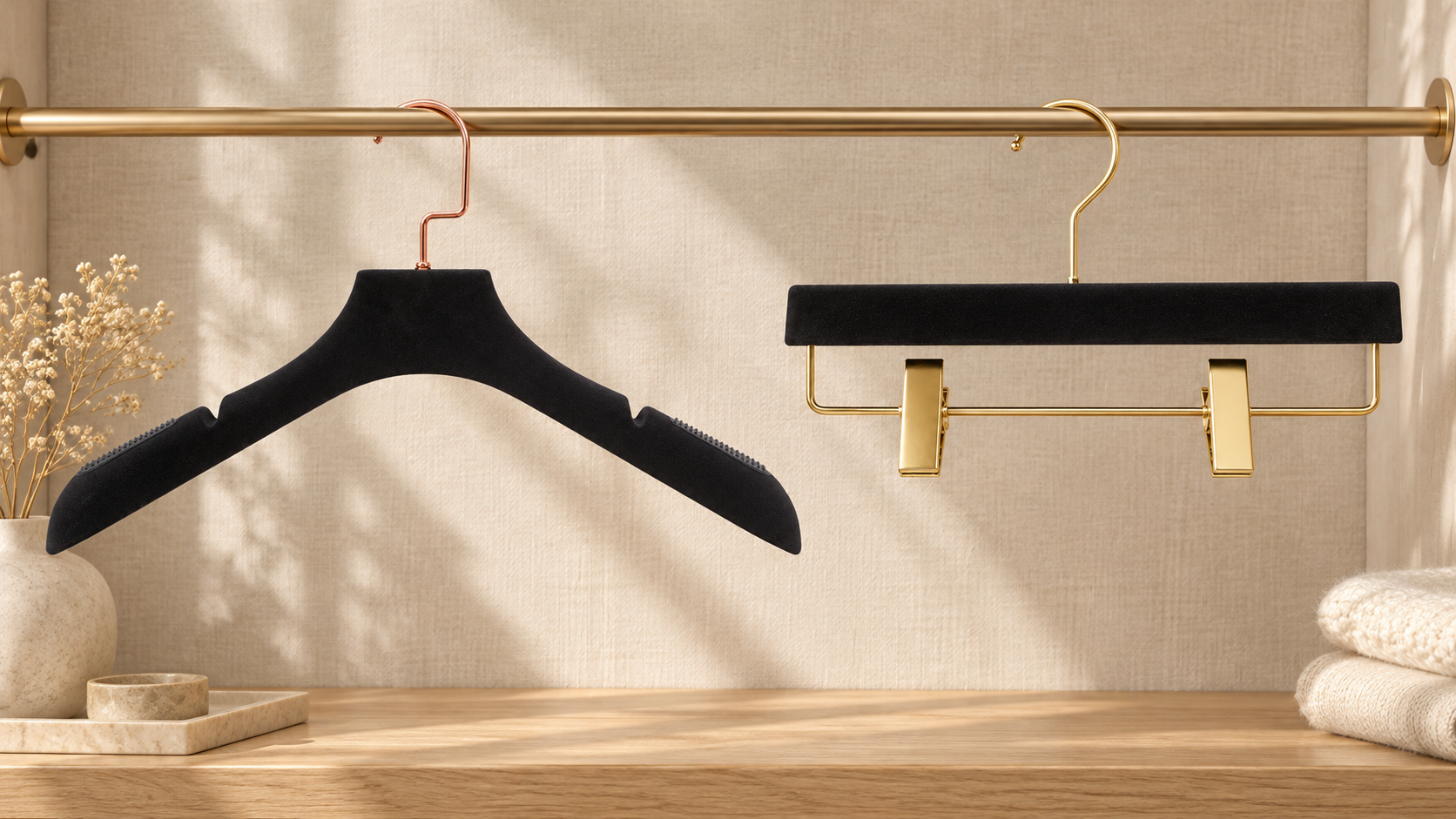
For the black flocked hanger with trouser bar, assess the published embossed-logo option on a real sample. Do not infer the result from a smooth plastic example. Agree any handling, cleaning or rubbing checks with the supplier, including the method and acceptance criteria; this guide does not claim a tested durability rating.
Also inspect protection inside the proposed carton. Hooks, neighbouring bodies or clips should not undermine the approved appearance during the agreed packing arrangement. Identify who signs the sample, which observations require revision, and which retained sample controls the order. Sampling approval and shipment inspection are distinct checkpoints.
Keep the Branding Specification Repeatable
Keep the model, finish, artwork version, logo dimensions, placement drawing, approved sample and packing record under one order reference. Ask for a quotation that distinguishes the hanger, marking setup, sample revisions and packing requirements. Confirm MOQ for the selected SKU and decoration; do not transfer one model’s minimum to the whole collection.
For standard projects, the planning reference is 7–10 days for sampling and a separate 25–35-day total window after sample, specification and commercial confirmation. That total includes manufacturing, QC and packing, not freight or customs. Model-specific quotations take precedence. For a repeat order, disclose changed artwork, finish or packing and agree which changes require a new sample before production starts.
Frequently Asked Questions
Does one logo method work on every hanger material?
No. Match the proposed technique to the exact body, coating and marking area. A published option on one model is not a universal compatibility promise. Request a sample representing the final material and finish.
How should buyers choose between laser engraving and a printed logo?
Compare the intended visual effect, lettering detail and contrast on the selected surface. Ask for samples or suitable model evidence, then approve the result rather than choosing solely from a technique name.
Which artwork files and dimensions should a buyer supply?
Provide the current master file, intended logo width and height, orientation, colour reference and position drawing. Confirm the accepted production format with the supplier; file requirements depend on the chosen process.
Can the same logo colour be matched across different hanger finishes?
Treat each surface as a separate approval. Texture, background colour and lighting affect perceived colour. Agree the reference and acceptable variation on physical samples rather than relying on a screen image alone.
What should be approved before a repeat order?
Confirm the retained sample, model, finish, file revision, position and packing. Identify changes explicitly and agree any resampling. A previous order number alone does not describe a revised production specification.
Review Your Logo Brief with VNEW
Use VNEW’s customization services to discuss a model-specific custom hanger branding brief. Send the artwork and sample requirements with quantity, destination and target timing so the quotation can address the actual surface, approval sequence and packing needs.
Buyer path
Continue from guidance to a working specification
Compare hanger options, define quantities by model and finish, then prepare the specifications needed for a quotation.
Share this story
Save or forward this article to your sourcing and merchandising team.