Article overview
Plan Hotel Wooden Hangers by Room Type
Start with a room-by-room count. Record the number of shirts, suits, dresses, coats, robes and trousers expected in each wardrobe. Calculate the base requirement for each room type as room count multiplied by hangers allocated per room; add separately agreed opening reserves and replacement quantities. Keep each property and hanger format as a separate line, rather than multiplying reserve stock into the room count.
Approve the hanger against the garments used in the property. Record shoulder width, wardrobe depth, robe weight, trouser support, and the number of formats required per room.
Separate guest-room, uniform, spa and laundry provision. For a phased renovation, deduct usable stock and identify who releases each delivery; do not quote it as a complete hotel opening.
Match the Shoulder and Bar to Guest Garments
Test hanger width, shoulder slope, shoulder thickness, trouser bar or clips, hook opening, load behavior, and clearance inside the actual wardrobe before approving production.
Two hotel wooden hangers can share a length but serve different tasks. The beechwood wide-shoulder hotel model records 44.5 cm and a 500-piece MOQ, for this model only. Compare the actual garment; length alone cannot establish support, clearance or robe suitability.
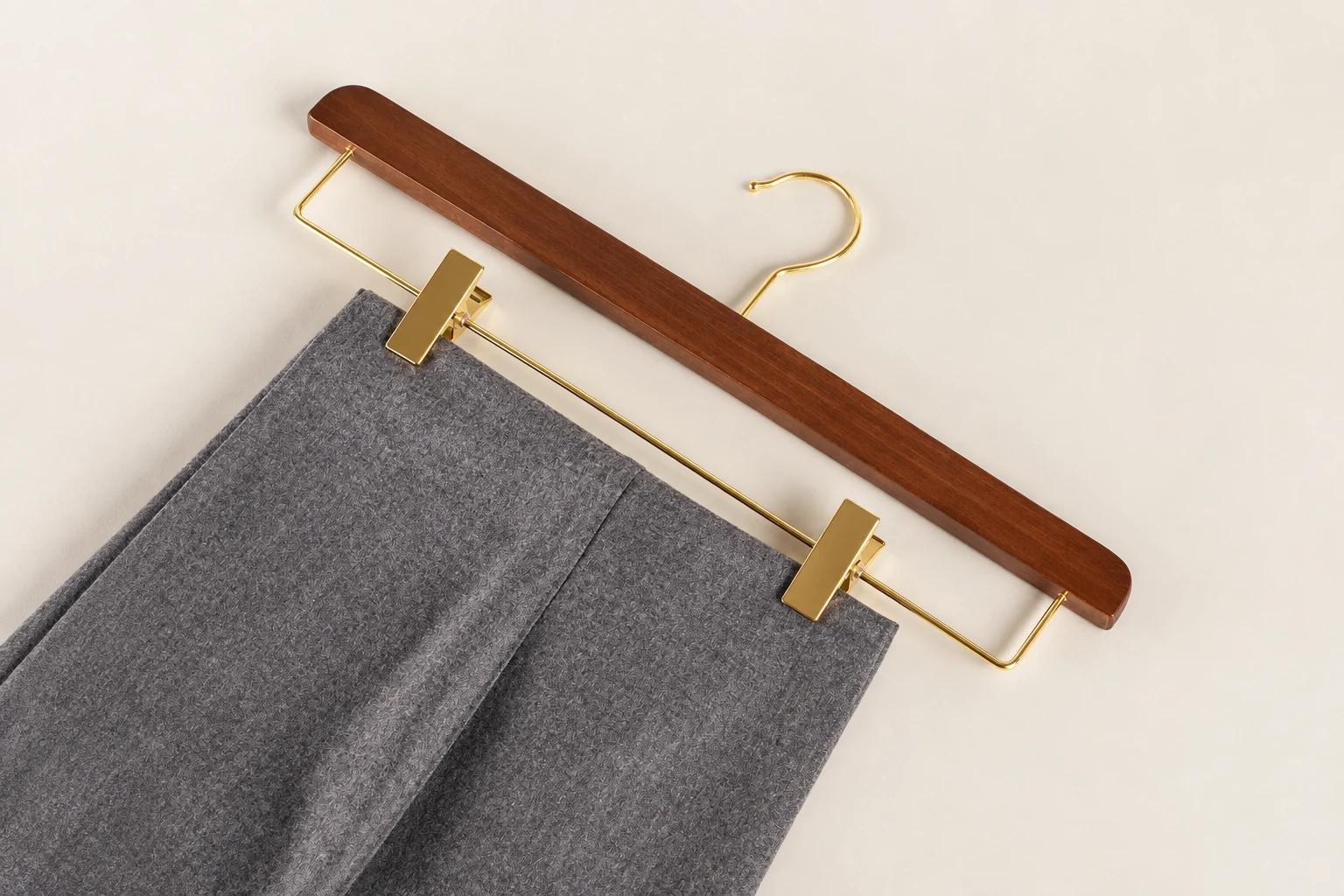
For trousers, check the fold-over bar or separate clips; for delicate garments, inspect contact marks after an agreed trial. Use the hanger measurement guide for consistent sample measurements, not supplier labels such as “standard”.
Measure the Wardrobe and Suspension System
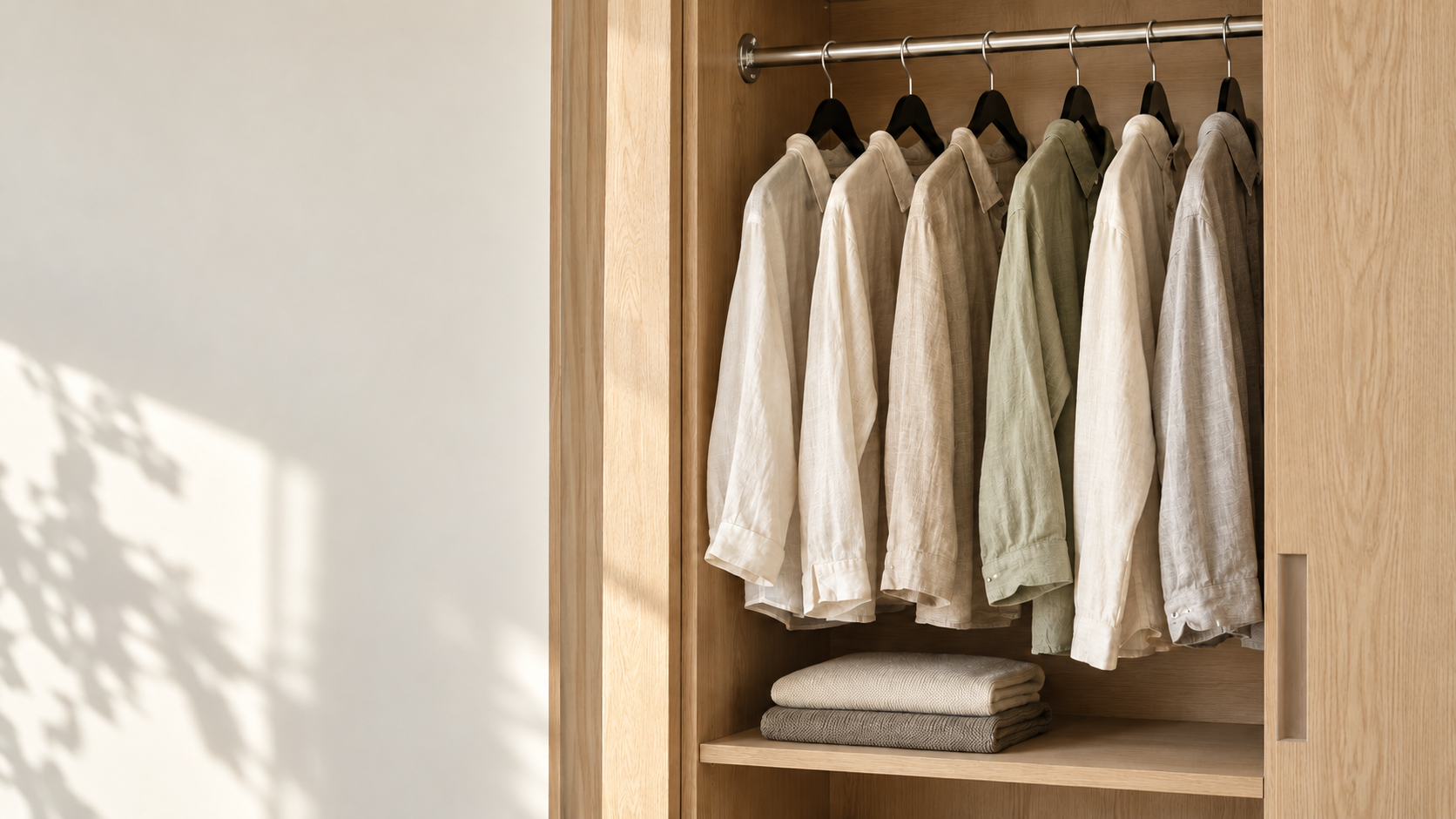
Measure the wardrobe itself. A wide shoulder hanger may support a tailored jacket well but collide with a shallow cabinet door. A robe hanger may require more shoulder thickness and load support than a shirt hanger. A trouser bar or clip format changes both guest handling and carton packing. Record wardrobe depth, rail diameter, rail height, hanger width, hook opening, shoulder thickness, and the heaviest target garment.
Confirm swivel behavior, hook finish, opening, rail fit, packing position, and whether a non-standard security format is required. Anti-theft hardware is reviewed as a specification, not assumed as a standard VNEW feature.
The wooden hotel model with ring suspension records lotus wood, 44.5 cm and a 1,000-piece MOQ. Its ring connection requires review against the property’s rail or mating hardware; it is not proof of universal rail compatibility or a promise that every configuration is theft-proof. Send dimensions and photographs of the installed rail, then approve how guests and staff attach, remove and replace the hanger.
Approve the Finish against the Hotel Handling Method
Confirm wood species, FSC-certified material options for the quoted SKU, finish system, sanding level, moisture control, and the supporting documentation available during supplier qualification.
Sampling should include guest use and housekeeping use. Hang representative garments for an observation period agreed with the hotel and supplier, move the hanger between wardrobe and laundry handling, and inspect shoulder pressure, bar grip, hook movement, finish marks, sharp edges, logo durability, and rail noise. Photograph the sample inside the wardrobe, in the carton, and at normal guest eye level.
Provide the cleaning procedure and cleaning-agent information. Agree sample tests for colour transfer, surface marks and hardware movement, with documented acceptance criteria. An image cannot establish chemical or moisture resistance.
Assign Property Codes, Cartons and Reorder Versions
Approve logo size, engraving or foil method, property code, room or floor allocation, carton label, and the master artwork used for repeat orders.
Keep the approved sample, dimension sheet, finish reference, logo proof, carton photo, SKU list, property allocation, inspection record, and reorder owner together.
The two model records also differ in packing: the ring-suspension model lists 100 pieces per carton; the beechwood wide-shoulder model lists 30. Confirm those quantities against the final specification and property allocation. Do not divide one hotel’s room provision between unidentified mixed cartons; labels should link the contents to the model, property and approved version.
| Approval item | Record in the hotel brief | Check before release |
|---|---|---|
| Room allocation | Rooms by type and hangers per room | Base stock and reserve are separate |
| Garment fit | Target jacket, robe and trouser format | Trial with the actual garments |
| Wardrobe clearance | Cabinet depth, rail height and diameter | Doors close with garments in place |
| Suspension | Hook or ring and mating hardware | Guest and housekeeping operation |
| Finish | Surface reference and cleaning method | Agreed sample inspection results |
| Reorder control | Property code, carton contents and version | Named owner and approved reference |
The approval file should contain one physical master sample, one dimension drawing, one finish reference, one hook reference, one logo proof, one carton photograph, one property-allocation list, and one named reorder owner. A multi-property group should also record whether each hotel uses the same logo, room code, carton label, and delivery destination.
For supplier comparison, send the same specification to every candidate and request the same outputs: construction, material evidence, dimensions, finish, branding, MOQ by SKU, sample calendar, production calendar, QC record, carton rule, and shipment handoff. This prevents a low quote based on an incomplete hanger from being compared with a complete hospitality program.
For hotel wooden hangers across properties, compare MOQ and cartons by model. Agree sample, production, QC, packing and transport milestones in the quote, not a fixed article timetable. Use the bulk-order planning guide to record these inputs.
Frequently Asked Questions
How many hangers should we allocate to each room?
Set the garment provision by room type and the hotel’s service standard. Multiply each type’s room count by its approved hanger allocation, then add agreed reserves and replacements as separate quantities. There is no universal room allocation in this guide.
Can one shoulder profile serve jackets, coats and robes?
Do not decide from hanger length alone. Compare contour, contact area, garment weight and wardrobe clearance on the actual sample. A robe or coat may need a different profile; approve it against the property’s representative garments.
Does a ring hanger fit any hotel wardrobe rail?
No universal fit is established. Review the ring, rail and mating hardware together, including the guest removal method and housekeeping replacement procedure. Confirm drawings and the installed system before approving the order.
How should we approve a finish for hotel cleaning?
Give the supplier the hotel’s cleaning procedure and relevant cleaning-agent information. Agree a sample test and acceptance criteria, then record surface changes and hardware behaviour. Do not infer chemical resistance from a colour name or photograph.
How do we keep repeat orders consistent across properties?
Archive the approved sample and specification version, logo proof, hardware reference and carton plan. Record the destination and property code for each order, with a named person who confirms any change before production.
Prepare a Hotel Wardrobe Brief with VNEW
Share room count, garment mix, wardrobe and rail dimensions, quantities by model, destination and opening date. Discuss the hotel wooden hangers specification with VNEW and identify the sample checks, packing assumptions and missing information before confirming a purchasing programme.
Buyer path
Continue from guidance to a working specification
Compare hanger options, define quantities by model and finish, then prepare the specifications needed for a quotation.
Share this story
Save or forward this article to your sourcing and merchandising team.