Article overview
Plan wholesale hangers for retail stores by store and garment SKU
Start with a store-by-garment matrix. For each location, list the garment reference, display fixture, proposed hanger specification and required quantity. Separate the opening display from back-room handling and already confirmed replenishment demand. These are different requirements; combining them into one total conceals whether a shortage concerns a garment, a hanger variant or a destination.
A location carrying structured jackets may need a different profile from one displaying lightweight tops. Group stores only after their garment and fixture requirements match. Identify existing models that must remain compatible.
For wholesale hangers for retail stores, name the allocation owner and attach the current revision to the order. Set reserves from your own handling records and confirmed plans, not a universal percentage. Distinguish reserves from the supplier's minimum.
Approve shoulder, bar and clip fit on the actual sales rail
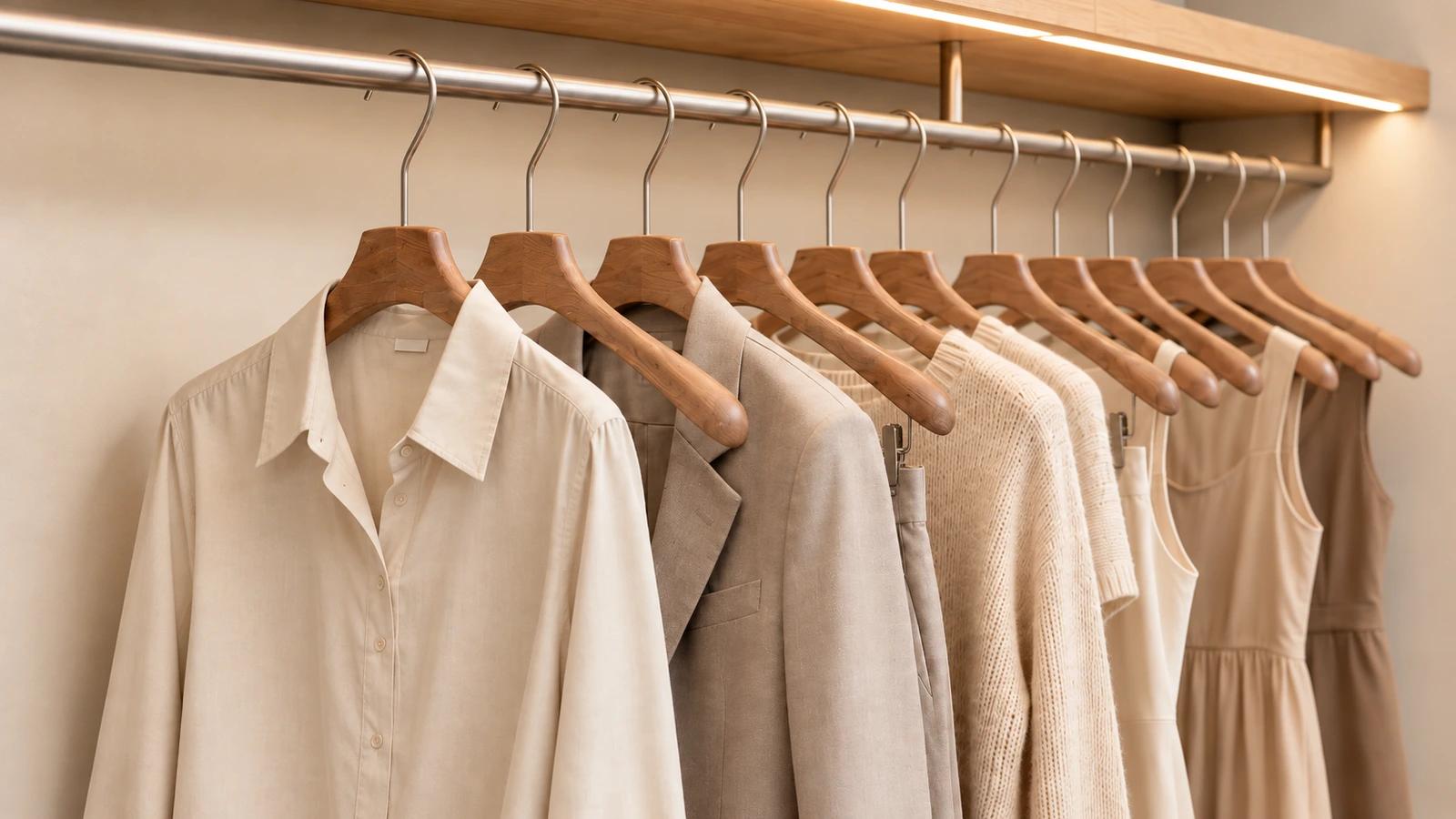
Compare the wooden hanger collection with your garment construction, not only your brand palette. Check shoulder support, seams and the space available between displayed garments. Use the wooden retail hanger example to define a sample request, not as evidence that every model has the same dimensions or capacity.
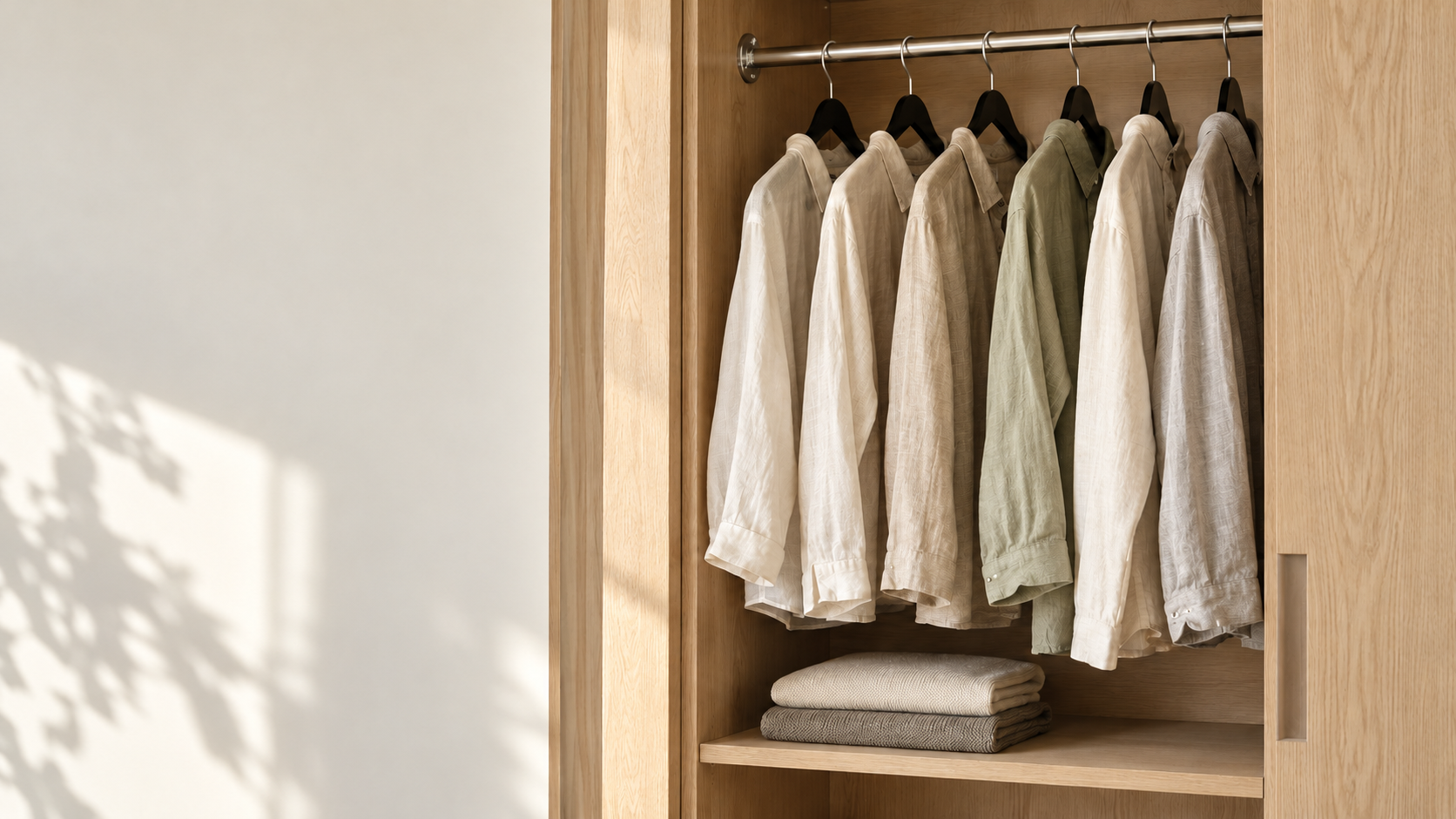
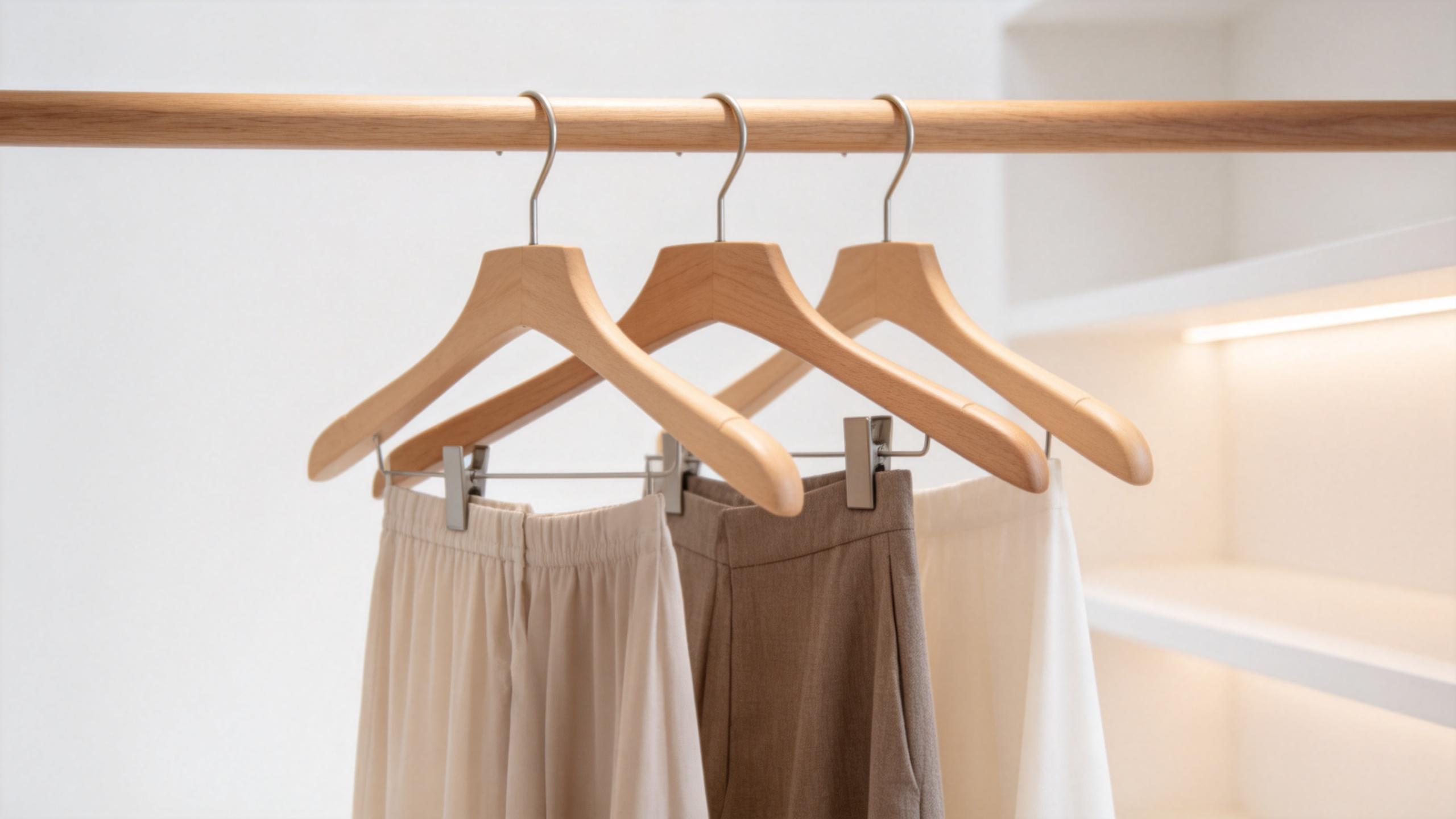
For velvet-finish options, inspect contact with the intended fabric and watch for unwanted surface transfer. A black finish does not establish grip. With metal formats, check hook clearance and the actual points touching the garment. Distinguish trousers folded over a bar from skirts held by clips; agree how retention and contact marks will be assessed.
Trial the sample on the actual rail, with the actual garment and adjacent displays. Record measuring points and agreed tolerances using the hanger size guide. A photograph alone cannot establish rail compatibility or garment fit.
Keep garment units, hanger SKUs and purchasing units separate
Garment quantities, purchasing quantities and packing quantities are not interchangeable. A matching jacket-and-trouser set may use one combined hanger or separate formats. State whether a quoted set contains multiple pieces, and whether spare clips or hooks are included. Convert every offer to the same agreed ordering unit before comparing totals.
When ordering wholesale hangers for retail stores, separate material, colour, finish and logo variants into the agreed SKU lines. VNEW's standard custom-program starting reference is 500 pieces per SKU, subject to the actual product and quotation. This is not a promise that mixed colours or unrelated formats can be combined to meet one minimum.
Read the custom hanger buying guide alongside your allocation sheet. Confirm SKU quantities, packing units and destination before asking for a comparable quotation. Do not substitute an assumed carton count for the number of usable pieces your stores require.
Use carton identification to make store allocation traceable
Agree labels and the packing list together. Specify central-warehouse or individual-store allocation. Staff should identify contents without inferring the model from a photograph. These fields connect the order to receiving checks; they are a working checklist, not a certification claim.
| Field | Order document | Receiving check |
|---|---|---|
| Hanger SKU and specification revision | Approved specification and purchase order | Match the model and current revision |
| Store or delivery destination | Allocation sheet and shipment plan | Confirm the intended location |
| Counted packing unit | Agreed packing list | Reconcile pieces, sets and carton contents |
| Approved sample reference | Signed sample record | Compare finish, profile and hardware |
Confirm inner protection, outer carton quantities and destination requirements for this order. Identify who approves a packing change before shipment. There is no universal carton capacity across shoulder profiles and materials; the agreed configuration determines it.
Record receiving exceptions before the next store shipment
Before forwarding cartons to stores, compare the received SKU, colour, shoulder profile, hook finish and quantity with the purchase order and signed sample. Use your agreed inspection method and acceptance criteria. Do not treat an unverified load figure or an assumed inspection standard as a substitute for the order's requirements.
Retain the carton label, batch reference, counted quantity and photographs of each exception. Distinguish cosmetic observations, fit concerns and quantity discrepancies. Keep affected cartons identifiable during review; do not distribute them simply to fill the allocation spreadsheet.
Document the resolution against the order and specification revision, then update the store plan. This gives the next purchasing team a specific record rather than a general complaint.
Reorder against a signed specification, not an old product photo
Reference the approved profile, dimensions, finish sample, hook, artwork revision and packing rule. Record changes explicitly. If garments or fixtures have changed, check whether the earlier sample remains representative before treating the reorder as identical.
For wholesale hangers for retail stores, work back from the required store delivery date. Standard-program planning references are 7–10 days for sampling, followed by a 25–35-day total production window after sample, specifications and commercial terms are confirmed. That total includes manufacturing, quality control and packing; transport, customs and store distribution are separate. The quotation controls the actual schedule, including repeat orders.
Use the customization specification process to record logo and finish changes. Previous supply does not guarantee current stock, an unchanged price or immediate dispatch. Send the latest allocation and receiving feedback with the reorder request.
Frequently Asked Questions
What minimum order should a retail buyer plan for?
Use 500 pieces per SKU only as VNEW's standard custom-program starting reference. Confirm the minimum for the exact model, finish and ordering unit in the quotation. Keep individual SKU quantities visible; the total across stores does not automatically satisfy each variant's conditions.
How should production and store delivery dates be separated?
Plan sampling separately from the confirmed production window. The standard references are 7–10 days for samples and 25–35 days including manufacturing, quality control and packing after approval and commercial confirmation. Add freight, customs and distribution separately, and obtain the order-specific dates.
Which artwork should accompany a repeat order?
Send the approved logo file, revision identifier, placement, size and finish reference. Confirm the format required for the selected process. Identify changes so an old proof is not used inadvertently.
What material or certification evidence belongs in the order file?
Request documentation applicable to the exact material, product and claim being purchased. If certified wood is required, confirm its applicable scope before ordering. Keep the specification, approved sample and relevant documents together; a general supplier description does not certify every model.
How can buyers compare replenishment offers beyond unit price?
Compare the same SKU specification, ordering unit, minimum, sampling requirement, confirmed schedule and packing configuration. Include inspection records and responsibility for exceptions. A lower figure is not comparable if it excludes agreed hardware, labelling or another element required by your stores.
Send your store allocation, garment references and latest specification to request a retail replenishment quotation. VNEW can review the proposed models and packing needs against a defined brief before the next order is confirmed.
Buyer path
Continue from guidance to a working specification
Compare hanger options, define quantities by model and finish, then prepare the specifications needed for a quotation.
Share this story
Save or forward this article to your sourcing and merchandising team.